
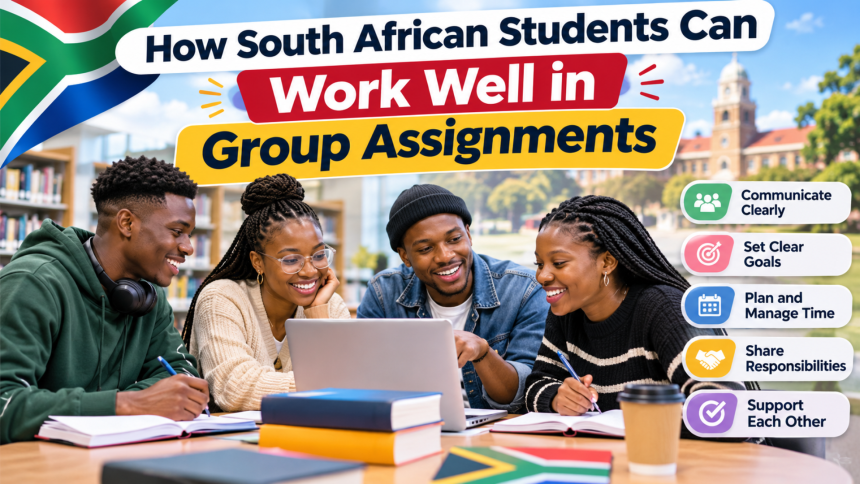
Group assignments are a regular part of university and college life in South Africa. They ask students to research, plan, and present work together, and they often count towards a final mark. Working well in a group is a skill you can learn, and it is also a skill that employers value.
Good group work does not happen by chance. It needs a clear plan, honest communication, and respect for each person’s time and ideas. When a group works well, the work is shared fairly, and the final result is stronger than anything one person could produce alone.
Agree on Roles and Expectations Early
Meet as a group soon after the task is given, even if the meeting is short. Read the task together and make sure everyone understands what is required. Then agree on who will do each part, and what a finished piece of work should look like. Write these decisions down and share them with the whole group, so nobody has to guess later.

- Choose a group leader or organiser to keep track of tasks and dates.
- Agree on the standard for the work, including length, style, and sources.
- Decide how the group will make decisions when members disagree.
Plan Together and Set Small Deadlines
Break the assignment into smaller tasks, such as research, writing, checking sources, and preparing the final presentation or document. Give each task a date that is a few days before the real deadline, so there is time to bring the parts together and fix problems. A shared plan helps everyone see the whole task and their place in it.
- List every task, the person responsible for it, and the date it is due.
- Choose one shared place to keep notes, drafts, and sources.
- Plan a short check-in meeting to review progress before the final deadline.
Communicate Clearly and Respectfully


Choose one main way to communicate, such as a group chat, and check it regularly. Keep messages short and clear, and reply when a decision needs your input. If you are running late or struggling with a task, say so early, so the group can help or adjust the plan. Differences in background, language, and working style are common in South African classrooms, so listen with respect and ask questions instead of making assumptions.
- Use one group chat or email thread for all decisions about the task.
- Share updates on your progress, even when the news is that you need more time.
- Listen to different ideas and explain your own view calmly and clearly.
Share the Work Fairly
A fair share does not always mean an equal number of words. Some tasks take longer, and some members have stronger skills in research, writing, or presenting. Divide the work in a way that uses each person’s strengths, but make sure no one is left with all of the difficult work. Each member should be able to explain the whole assignment, not only their own part.
- Match tasks to strengths, but share the harder and easier work between members.
- Keep a written record of who agreed to do each part.
- Read the work of others and offer helpful comments, not only praise.
Handle Problems Early

Problems in group work are common, and they are easier to solve when they are raised early. If a member misses a meeting or a deadline, contact them first and ask what happened. There may be a transport problem, an illness, or a family matter. If the problem continues, raise it with the group, agree on a new plan, and speak to your lecturer or tutor if the group cannot solve it together.
- Contact a missing member politely before you assume the worst.
- Agree on a new deadline and a backup plan when work is late.
- Ask your lecturer or tutor for advice if the group cannot resolve the issue.
Bring the Work Together Carefully
Leave time to bring the separate parts together into one clear piece of work. One person should read through the whole assignment to check that the style is consistent, the ideas follow a clear order, and the references are complete. Read the final version out loud together if you can. This last check often finds mistakes that are easy to miss when you only read your own part.
Conclusion
Working well in group assignments comes down to a clear plan, shared responsibility, and honest communication. Agree on roles early, set small deadlines, share the work fairly, and deal with problems while they are still small. With practice, group work becomes less stressful, and the skills you build will help you in your studies and in your future workplace.