
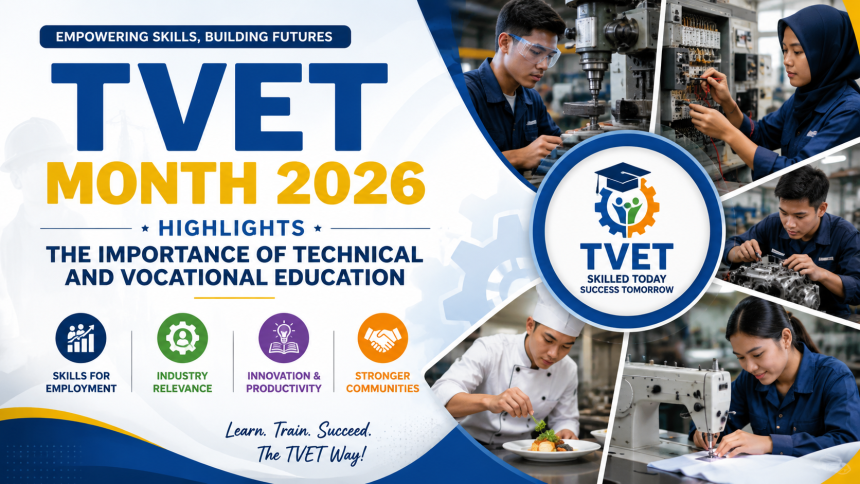
TVET Month 2026 Highlights the Importance. Technical and Vocational Education and Training (TVET) is receiving renewed attention in South Africa as the country works to develop practical skills, improve employment opportunities and prepare young people for a rapidly changing economy. The launch of TVET Month 2026 has placed technical and vocational education at the centre of discussions about skills development, employment, entrepreneurship and economic growth.
Higher Education and Training Minister Buti Manamela officially launched TVET Month 2026 at Esayidi TVET College, where he called for a change in the way young South Africans view TVET colleges. According to the Minister, these institutions should not be considered a second choice for students who do not follow traditional university pathways. Instead, they should become institutions of choice for learners seeking practical and career-focused education.
TVET Colleges Should Be Institutions of Choice
Speaking at the launch, Minister Manamela emphasised that TVET education provides an important pathway into employment, entrepreneurship, further learning and specialised occupations.

The Minister encouraged young people to explore the programmes available at TVET colleges and choose courses that match both their personal interests and the skills required by South Africa’s economy.

TVET colleges offer an alternative pathway to traditional academic education by focusing strongly on occupational and practical skills. This approach can help students develop competencies that can be directly applied in workplaces and industries.
The growing demand for technical skills makes TVET education particularly important as industries continue to change through technology, automation and new production methods.
Work-Integrated Learning Is Essential

One of the key issues highlighted during the TVET Month 2026 launch was the importance of Work-Integrated Learning (WIL).
Minister Manamela stressed that students need opportunities to gain practical workplace experience while completing their education. Classroom learning alone may not be enough to prepare students for the demands of modern employment.
Work-Integrated Learning allows students to apply classroom knowledge in real workplace environments. It can help learners understand professional expectations, develop practical competencies and gain experience that may improve their transition from education into employment.
The Minister called on businesses and industry partners to strengthen their relationships with TVET colleges and provide more opportunities for students to gain workplace-based experience.

Stronger partnerships between colleges and employers can also help ensure that training programmes remain relevant to the needs of the labour market.
TVET and South Africa’s Skills Revolution
South Africa is experiencing major changes in the workplace as digital technology, industrialisation, innovation and environmental priorities reshape the economy.
According to Minister Manamela, TVET colleges have an important role in preparing young people for these changes. Employers increasingly require workers who understand modern technologies, technical processes and emerging industries.
The transition towards a green economy is also creating demand for new skills. Renewable energy, sustainable technologies, environmental management and other green industries are expected to influence future employment opportunities.
TVET colleges can contribute to this skills revolution by developing programmes that respond to changing industry requirements.
Focus on Employment and Practical Skills
TVET Month 2026 also provides an opportunity to promote occupational training and career development. The focus is not simply on obtaining a qualification but on developing skills and competencies that can be used effectively in the workplace.
This distinction is particularly important in an economy where employers are looking for candidates who can demonstrate practical knowledge and workplace readiness.
By connecting education with real economic opportunities, TVET colleges can help students prepare for employment while also supporting entrepreneurship and further education.
Students can use TVET programmes to develop technical abilities, gain practical experience and establish pathways into different occupations.
Industry Partnerships Can Create More Opportunities
Industry participation is an important part of strengthening the TVET system. Employers can support colleges by providing workplace placements, internships, training opportunities and exposure to real-world working environments.
These partnerships can benefit both students and businesses. Students gain valuable experience, while employers can help shape training programmes around the skills they need.
A stronger connection between education institutions and industry may also reduce the gap between qualifications and employment by ensuring that students are trained for actual workplace requirements.
Changing Future for TVET Education
The launch of TVET Month 2026 brought together learners, students, alumni, industry representatives and other stakeholders to discuss the future of technical and vocational education in South Africa.
As technological innovation continues to transform industries, the role of TVET colleges is expected to become increasingly important. Digital transformation, industrial development and the growth of green industries are creating new demands for skilled workers.
For young people considering their education and career options, TVET colleges can provide practical pathways into occupations, entrepreneurship and further learning.
Conclusion
TVET Month 2026 has highlighted the need to strengthen technical and vocational education as part of South Africa’s broader skills development strategy. Minister Buti Manamela’s call for TVET colleges to become institutions of choice reflects the growing importance of practical education in a changing economy.
With stronger industry partnerships, expanded Work-Integrated Learning opportunities and programmes aligned with digital and green skills, TVET colleges can help prepare young South Africans for the future of work.
The message from TVET Month 2026 is clear: technical and vocational education should be viewed not as a second option, but as a valuable pathway towards skills, employment, entrepreneurship and economic participation.