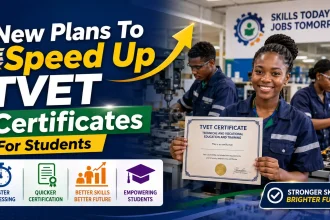

Speed Up TVET Certificates. Thousands of Technical and Vocational Education and Training (TVET) students have faced long delays in receiving their official certificates after completing their studies. In many cases, graduates have waited several months or even years before obtaining the documents needed to apply for jobs, continue their education, or start businesses. Recognizing this challenge, the Department of Higher Education and Training (DHET) has announced a major initiative to modernize the certification process through new digital systems.
The announcement was made by Higher Education and Training Deputy Minister Dr. Nomusa Dube-Ncube during the Esayidi TVET College graduation ceremony held at the Ugu Sports and Leisure Centre. The department believes that digitizing certification and workplace placement systems will significantly reduce delays and help graduates enter the workforce much faster.
DHET Introduces Digital Systems for Faster TVET Certificates
For many TVET graduates, receiving a certificate has been a lengthy and frustrating process. Without an official qualification, graduates often struggle to apply for employment, register businesses, or access funding opportunities.

To address these concerns, the DHET is introducing fast-tracked digital systems designed to improve both certificate issuance and workplace placements. The new approach aims to shorten the time between a student’s final assessment and the moment they receive their official qualification.

According to Deputy Minister Dr. Nomusa Dube-Ncube, these improvements represent a significant step toward creating a more efficient education system that supports students after graduation rather than leaving them waiting for administrative processes to be completed.
Ending the TVET Certificate Backlog
One of the department’s primary goals is to eliminate the long-standing backlog of TVET certificates. Over the years, thousands of graduates have experienced unnecessary delays due to manual administrative processes and outdated systems.

The Deputy Minister acknowledged the frustration experienced by students and emphasized that these delays should become a thing of the past. By replacing traditional paperwork with digitized processes, the department expects to speed up certificate production and distribution while reducing administrative errors.
The modernization initiative is also expected to improve transparency, making it easier for students to track the progress of their certificates.
Faster Certificates Mean Faster Employment
Receiving a qualification quickly can have a major impact on a graduate’s future. Employers often require official certificates before offering permanent employment, meaning any delay directly affects a graduate’s ability to earn an income.
The DHET believes that faster certification will help graduates enter the job market sooner, reducing unemployment among skilled young people. In addition, quicker workplace placements will provide graduates with valuable practical experience that improves their long-term career prospects.

The department stressed that a delayed certificate often results in delayed employment opportunities, making the modernization of certification systems an important economic priority.
Supporting Young Entrepreneurs
The benefits of faster certificate delivery extend beyond traditional employment. Many TVET graduates choose to become entrepreneurs by starting businesses in technical and vocational fields.
Deputy Minister Dube-Ncube encouraged graduates to view their qualifications as valuable assets that can help them launch successful businesses. With quicker access to official certificates, graduates can register companies, apply for government and private funding, obtain licenses where required, and compete for procurement opportunities without unnecessary delays.
Graduates trained in areas such as electrical contracting, welding, construction, agriculture, baking, and other vocational trades are expected to benefit significantly from these improvements.
TVET Colleges Play a Vital Role in Economic Growth
The South African government continues to recognize TVET colleges as essential institutions for national development. These colleges produce skilled workers needed to support infrastructure projects, manufacturing industries, agriculture, construction, engineering, and many other sectors.
According to the Deputy Minister, South Africa’s economic growth depends heavily on the availability of qualified artisans, technicians, and mid-level technical professionals. Strengthening TVET education therefore remains one of the government’s long-term priorities.
By improving certification processes and expanding workplace learning opportunities, the DHET hopes to strengthen the connection between education and employment.
Stronger Partnerships with Industry
Another important part of the government’s strategy involves improving collaboration between TVET colleges and employers.
The Deputy Minister encouraged businesses to work more closely with colleges by helping develop relevant curricula and offering workplace-based learning opportunities for students. These partnerships can ensure that graduates leave college with practical skills that match current industry demands.
At the same time, she challenged TVET institutions to become leaders in innovation by conducting applied research and developing practical solutions for industry rather than simply responding to employer needs.
Lifelong Learning in a Changing Job Market
Technology continues to transform workplaces around the world. Artificial intelligence, automation, digital technologies, and data-driven systems are changing the skills employers expect from workers.
Because of these rapid developments, the Deputy Minister encouraged graduates to continue learning throughout their careers. She reminded students that receiving a qualification is only the beginning of their professional journey.
Continuous training, professional development, and learning new technologies will help graduates remain competitive in an evolving job market.
Equal Opportunities for Rural Graduates
During her address, Dr. Dube-Ncube also rejected the belief that graduates from rural TVET colleges have fewer career opportunities than students studying in urban areas.
She emphasized that institutions like Esayidi TVET College produce highly qualified graduates whose skills are nationally recognized by employers across South Africa. She encouraged graduates not to allow their geographical location to limit their ambitions, highlighting that determination, practical skills, and innovation matter more than where someone studied.
Conclusion
The Department of Higher Education and Training’s new digital certification initiative represents a significant step toward improving the experience of TVET graduates across South Africa. By introducing faster digital systems for certificate issuance and workplace placements, the government aims to eliminate long-standing administrative delays that have prevented many graduates from securing employment or starting businesses.