
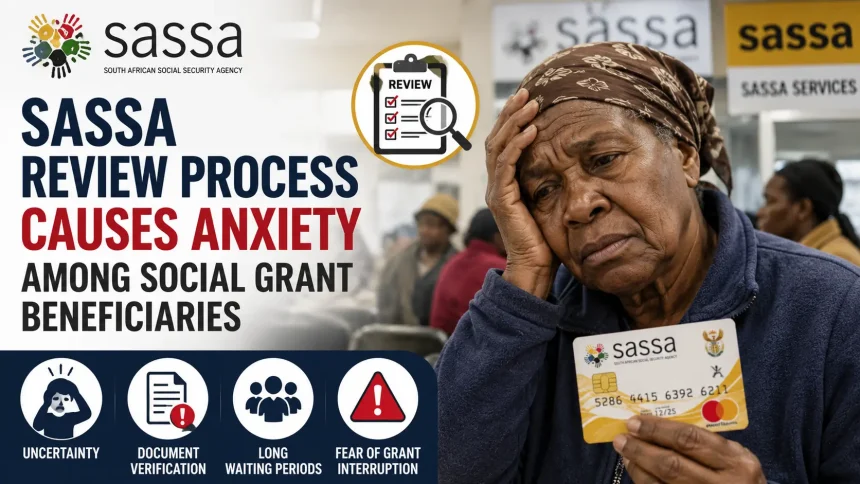
SASSA Review Process Causes Anxiety. The South African Social Security Agency (SASSA) has started reviewing thousands of social grants to confirm that beneficiaries still meet the eligibility requirements. While the process is intended to prevent fraud and ensure that grants reach the right people, it has also created anxiety among many vulnerable South Africans who depend on these payments for their daily needs.
Long queues, transport expenses, missing documents and uncertainty about grant payments have become major concerns for beneficiaries. Many elderly people, persons with disabilities, unemployed individuals and single-parent households fear that their grants could be delayed or suspended if they cannot complete the review process on time.
Why Is SASSA Reviewing Social Grants?
The review process is a legal requirement under the Social Assistance Act. SASSA uses reviews to verify whether beneficiaries continue to qualify for the grants they receive.

Changes in a beneficiary’s financial situation, medical circumstances or personal information may affect eligibility. According to Social Development Minister Dina Pule, the purpose of the process is to ensure that the right grant is paid to the right person at the right time.

Improved data verification systems have reportedly helped SASSA identify more than 420,000 grants for review during the 2025/26 financial year. More than 240,000 reviews have already been completed, while around 160,000 beneficiaries did not appear for their reviews.
For the 2026/27 financial year, SASSA plans to review more than 350,000 grants. The government expects the exercise to generate savings of approximately R1.5 billion.
Beneficiaries Face Long Queues and Extra Costs

Although grant reviews are designed to strengthen the social assistance system, community leaders say the process is causing significant difficulties for legitimate beneficiaries.
Some beneficiaries reportedly arrive at SASSA offices as early as 3am to secure a place in the queue. Others have to make several trips because they do not have all the required documents or need additional assistance.
For people living in poor communities, transportation costs can be a serious burden. Elderly beneficiaries and people with disabilities may also struggle to travel long distances and remain in queues for several hours.
Community leader Rajesh Ramnunan said accountability was necessary, but warned that innocent beneficiaries should not suffer because of the process. He called for clearer communication and suggested that beneficiaries should receive letters explaining exactly which documents they need before visiting an office.

Fear of Grant Suspensions
One of the biggest concerns among beneficiaries is the possibility of losing their grants.
For many households, a social grant is not simply additional income. It can be an important source of money for food, transport, electricity, school-related expenses and medication.
Community representatives have warned that even a temporary interruption can create serious financial hardship. Elderly people who depend on grants for essential medication could be particularly affected if their payments are delayed.
IFP eThekwini councillor Dr Jonathan Annipen said the review system was justified because public funds must be protected. However, he questioned whether the current procedures adequately considered the circumstances of poor and vulnerable South Africans.
He argued that beneficiaries should not have to spend a significant portion of their limited income on transportation simply to prove that they remain eligible for assistance.
Calls for a More Accessible Review System
Several community leaders have called for changes that would make the review process easier for beneficiaries.
Suggested improvements include:
- More mobile SASSA outreach services in disadvantaged communities
- Temporary review centres closer to beneficiaries
- Appointment-based review systems
- Better communication about required documents
- Longer operating hours at SASSA offices
- Additional staff to reduce waiting times
- More use of existing government databases to reduce paperwork
- A grace period for beneficiaries who need to submit missing documents
These measures could help reduce pressure on SASSA offices while making the process more accessible to elderly and disabled beneficiaries.
SASSA Plans to Increase Support
The government has acknowledged concerns surrounding long waiting times and the demand for frontline services.
More than 1,000 contract workers are reportedly being recruited across the country to assist with beneficiary enquiries, applications and reviews. The additional staff are also expected to help reduce waiting times at service points.
SASSA is also working to improve its digital services, including its WhatsApp platform and mobile application. These services are intended to allow beneficiaries to access certain services remotely and reduce the need for unnecessary visits to physical offices.
Extending operating hours at SASSA offices is another measure being considered to allow more people to receive assistance.
Community Leaders Want a Balance Between Fraud Prevention and Support
Community leaders generally agree that fraudulent and duplicate grants should be identified and stopped. However, they argue that fraud prevention should not create unnecessary barriers for legitimate beneficiaries.
DA KwaZulu-Natal spokesperson on Social Development Shontel de Boer said SASSA needed sufficient staffing and suitable facilities to deal with elderly and disabled beneficiaries.
She also highlighted reports of grant interruptions that have affected vulnerable people. According to her, losing grant income can leave beneficiaries without money for essential food and medication.
Phoenix community leader Sham Maharaj similarly stressed the importance of conducting reviews fairly, efficiently and sensitively.
He warned that losing a social grant could increase food insecurity, place additional pressure on families and deepen poverty in already disadvantaged communities.
SASSA Gold Card Replacement Deadline
Alongside the grant review process, thousands of beneficiaries are also dealing with the replacement of old SASSA Gold Cards.
More than 280,000 beneficiaries who still use Gold Cards have been instructed to replace them with new Postbank Black Cards before the August 31 deadline.
This creates another administrative challenge for people who may already be struggling to visit service points and complete their required documentation.
Beneficiaries should therefore pay attention to official communications regarding both grant reviews and card replacement requirements.
How the Review Process Can Be Improved
A successful grant review system needs to protect public funds while also protecting legitimate beneficiaries.
Clear communication should be a priority. Beneficiaries should know why they have been selected for review, which documents they need, when they must complete the process and what happens if they cannot attend on the specified date.
SASSA could also reduce pressure on beneficiaries by expanding mobile services and using existing government records to verify information wherever possible.
For elderly people and persons with disabilities, special arrangements may be necessary so that they do not have to spend hours standing in queues.
Conclusion
The SASSA grant review process is intended to ensure that social assistance reaches people who genuinely qualify and to reduce fraud and incorrect payments. However, the process has also created anxiety among legitimate beneficiaries who depend on their grants for essential household expenses.
The challenge for government is to maintain strong verification systems without turning the review process into an unnecessary administrative burden.
With better communication, additional staff, mobile services, appointment systems and more accessible review centres, SASSA could make the process easier for vulnerable beneficiaries while continuing to protect public funds.