Student Loan Work in South Africa. For many students in South Africa, paying for tertiary education can be a major financial challenge. Tuition fees, accommodation, study materials and transport costs can quickly become expensive. A student loan is one option that students can consider when they need financial assistance to continue their studies.
Before applying, however, it is important to understand how student loans work, who can apply, what expenses they can cover and when repayment begins.
What Is a Student Loan?
A student loan is a type of financing available to current or prospective students who are enrolled in an academic programme at a tertiary education institution.

The money can help students manage different education-related expenses, including:
- Tuition and registration fees
- Learning and study materials
- Accommodation
- Transportation
- Other costs related to tertiary education

Students can apply for funding through banks and other financial institutions. However, the terms and conditions of a student loan can vary between lenders.
Factors such as the amount borrowed, interest rate and repayment period can affect the overall cost of the loan.
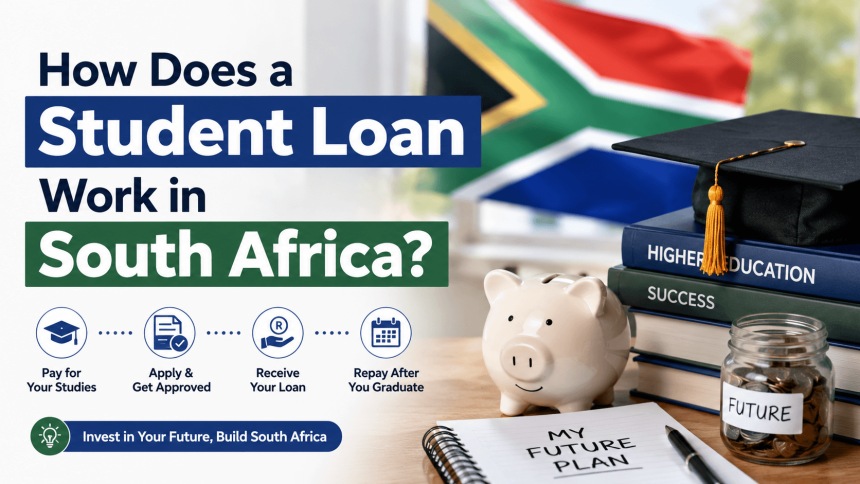
How Does a Student Loan Work?

In South Africa, students generally apply for a student loan together with a parent or guardian who has an income. The parent or guardian may be required to act as the responsible party or surety for the loan.
While the student is studying, the parent or guardian is generally responsible for making the monthly interest payments. This allows the student to focus on their education while completing their qualification.
Once a full-time student completes their studies and starts working, they are expected to begin repaying the loan according to the agreement with the financial institution.
Because every bank can have different requirements, students should carefully review the loan agreement before accepting the funding.

Which Banks Offer Student Loans in South Africa?
Students can explore student financing options from various financial institutions in South Africa. Banks that may offer student loan products include:
- Standard Bank
- Capitec
- Absa
- FNB
- Nedbank
- Investec
The availability, eligibility requirements, interest rates and repayment conditions can differ between institutions. Students should therefore compare available options before deciding which loan is suitable for their circumstances.
When Do Students Start Repaying a Student Loan?
The repayment process can depend on whether the student is studying full-time or part-time.
Full-Time Students
Full-time students generally need to nominate a surety who has an income and can make the required monthly interest payments while the student is studying.
The student normally begins repaying the loan once they start working, subject to the terms agreed with the financial institution.
Part-Time Students
Part-time students may be required to begin making repayments at the start of the academic year. The exact repayment requirements depend on the lender and the terms of the loan agreement.
Students should confirm these conditions with their chosen financial institution before submitting an application.
What Should You Consider Before Applying?
Taking out a student loan is an important financial decision. Students and their parents or guardians should understand the full cost of borrowing before signing an agreement.
Important factors to consider include:
Interest rate: Check how much interest will be charged and how it affects the total amount that must eventually be repaid.
Loan amount: Borrow only what is necessary to cover eligible education expenses.
Repayment terms: Understand when repayments start, how much must be paid each month and how long repayment will continue.
Surety requirements: Some student loans require a parent or guardian with an income to act as surety.
Additional costs: Check whether the loan includes any fees or other charges.
Are There Alternatives to Student Loans?
A student loan is not the only way to finance tertiary education. Students should also investigate other funding opportunities before taking on debt.
One important option is the National Student Financial Aid Scheme (NSFAS), which provides financial assistance to eligible students under its applicable requirements.
Students can also search for bursaries and other education funding opportunities. The Bursaries Portal can be used to find information about available bursaries.
Conclusion
A student loan can help South African students pay for tertiary education when they do not have enough funds to cover their study-related expenses. However, borrowing money also creates a financial obligation that must eventually be repaid.
Before submitting a student loan application, students and their parents or guardians should compare different options, understand the interest charges and carefully review the repayment terms. It is also worth checking alternatives such as NSFAS and bursaries, which may reduce the need to take on student debt.