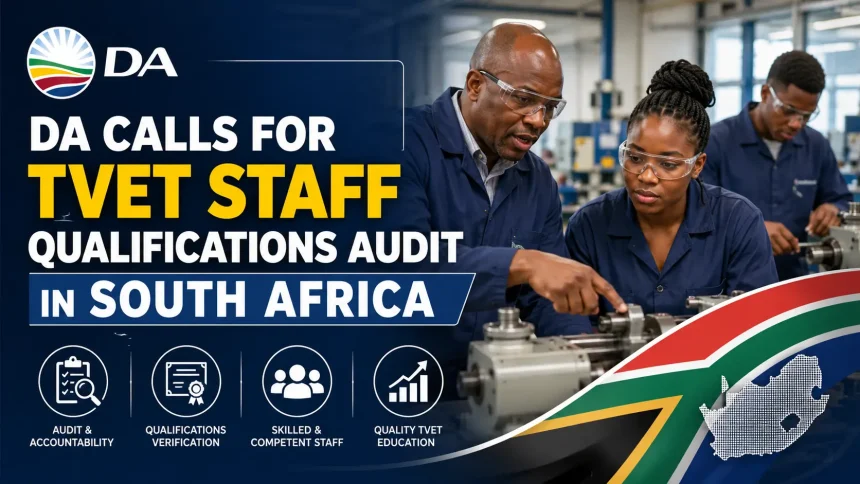
DA Calls for TVET Staff Qualifications Audit. The Democratic Alliance (DA) has called for an urgent audit of staff qualifications, expertise and leadership at Technical and Vocational Education and Training (TVET) colleges across South Africa. The call follows oversight visits that reportedly raised concerns about lecturers being assigned to teach subjects outside their areas of specialisation.
The DA says a comprehensive qualifications audit is necessary to determine whether TVET colleges have enough suitably qualified staff to provide students with the practical and academic skills required by the modern job market.
Why the TVET Staff Audit Is Important
TVET colleges play an important role in South Africa’s education and employment system. They provide students with technical, vocational and occupational skills designed to improve their chances of entering the workplace or pursuing further training.

According to the DA, education and training should create a strong connection between young people and economic participation. When lecturers do not have the appropriate subject expertise, however, there may be concerns about the quality and relevance of education students receive.

The proposed audit would examine the qualifications and areas of expertise of lecturers and other staff members. It could also provide information about whether particular colleges have shortages in specific fields.
Concerns About Lecturers Teaching Outside Their Expertise
One of the examples highlighted by the DA is Flavius Mareka TVET College in the Free State. The party alleges that lecturers who specialise in mathematics have been moved into engineering-related teaching roles because the institution does not have enough suitably qualified engineering lecturers.

If confirmed, such arrangements could create challenges for both lecturers and students. Technical subjects often require specialised knowledge, practical experience and familiarity with industry standards. A shortage of appropriately qualified lecturers could therefore affect students’ ability to develop the skills expected by employers.
The DA says the situation may also create an imbalance across institutions. Some areas could have an oversupply of expertise in certain subjects, while other departments struggle to find qualified personnel.
Leadership and Accountability Concerns
The DA has also raised concerns about leadership within TVET colleges. The party has questioned whether institutional leaders are being held sufficiently accountable for staffing challenges and the overall performance of their colleges.
Effective leadership is important for ensuring that colleges recruit suitable lecturers, manage resources properly and respond to shortages in critical skills. College management also has a responsibility to ensure that students receive training that is aligned with their qualifications and career goals.

The DA has accused the Department of Higher Education of failing to provide adequate accountability for institutional leadership. The party believes stronger monitoring may be required to identify weaknesses and ensure that colleges meet the expectations placed on the TVET sector.
What the Proposed Audit Could Examine
A nationwide audit could provide a clearer picture of staffing conditions across South Africa’s TVET colleges. Among the areas that could be reviewed are lecturer qualifications, subject specialisation, teaching assignments, professional experience and staffing shortages.
The audit could also identify departments where colleges urgently need additional specialists. This information could help authorities develop targeted recruitment and training programmes rather than relying on staff members to work outside their main areas of expertise.
Leadership structures could also be included in the review. Examining management capacity and institutional accountability could help determine whether colleges have the leadership necessary to address staffing and educational challenges effectively.
DA Requests Feedback From TVET Colleges
DA MP Karabo Khakhau said the party has requested feedback from several TVET colleges regarding the concerns raised during oversight activities. Institutions mentioned include Gert Sibande TVET College and King Hintsa TVET College.
The DA has reportedly requested responses within 30 days. The information obtained from these colleges could help establish whether the concerns identified during oversight visits are isolated cases or part of a wider problem affecting the TVET sector.
A broader audit would potentially allow policymakers to compare staffing conditions between institutions and provinces.
Impact on Students and the Job Market
The debate over lecturer qualifications is particularly important because TVET colleges are expected to prepare students for employment. South Africa continues to face challenges involving youth unemployment and skills shortages, making effective vocational education an important part of the country’s economic development strategy.
Students who enrol in technical and vocational programmes expect to gain relevant knowledge and practical skills. Qualified lecturers with appropriate subject expertise can play an important role in helping students understand complex concepts, complete practical training and prepare for workplace requirements.
Where staffing shortages exist, colleges may need additional recruitment, professional development or partnerships with industry to strengthen their programmes.
Possible Benefits of a Qualifications Audit
A well-designed audit could provide several benefits. First, it could establish an accurate record of the qualifications and specialisations available at each TVET college. Second, it could highlight departments experiencing serious staff shortages.
Third, the findings could support better workforce planning. Colleges and government departments could use the information to recruit lecturers in areas where demand is highest.
The audit could also improve transparency and accountability. If staffing problems are identified, responsible institutions would have clearer evidence to guide corrective action.
Conclusion
The Democratic Alliance’s call for an urgent TVET staff qualifications audit has placed renewed attention on staffing, lecturer expertise and leadership within South Africa’s vocational education sector. The concerns raised about lecturers potentially teaching outside their areas of specialisation highlight the importance of ensuring that students receive instruction from appropriately qualified professionals.
A comprehensive audit could help determine how widespread these challenges are and identify where additional expertise is required. It could also assist policymakers in improving recruitment, staff development and institutional accountability.
For TVET colleges to fulfil their role in preparing young people for employment and economic participation, students need access to quality training delivered by suitably qualified staff. The outcome of the proposed audit could therefore provide valuable information for strengthening South Africa’s TVET system and improving its ability to meet the country’s future skills needs.