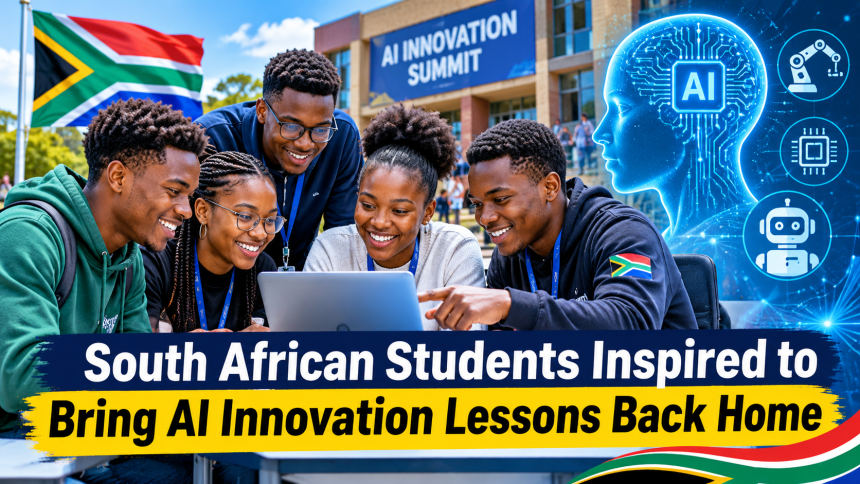
South African Students Inspired to Bring AI. South African students have gained valuable knowledge and practical experience in artificial intelligence (AI), robotics and emerging technologies during an educational visit to Sacramento State University in California, United States. The visit has inspired young learners to explore new opportunities, develop innovative ideas and use their knowledge to contribute to South Africa’s technological and economic development.
The educational programme formed part of President Cyril Ramaphosa’s delegation to the United States, where South African representatives participated in an AI learning mission. A group of 27 students accompanied the delegation and took part in activities designed to introduce them to modern technology, academic research, robotics and international collaboration.
For the students, the experience was more than just a university visit. It provided an opportunity to see how artificial intelligence is being used in education, research and industry while allowing them to exchange ideas with American students and university representatives.
The visit also encouraged participants to think about how technological developments in the United States could be adapted to address challenges in South African communities.
South African Students Explore AI and Robotics at Sacramento State University
During their visit, the students participated in several educational activities at Sacramento State University. The programme included robotics demonstrations, artificial intelligence workshops, campus tours, cultural exchanges and discussions with student leaders.
The delegation was hosted by the university’s Black Honors College as part of a broader South African educational engagement led by Higher Education and Training Minister Buti Manamela and Small Business Development Minister Stella Ndabeni.
One of the main highlights was a technical workshop focusing on autonomous systems and robotics. The session was led by Dr Rohollah Moghadam and introduced students to practical applications of robotics and physical AI.
Students also visited the university’s robotics laboratory, where they explored how technology and research can be used to develop innovative solutions.
These activities gave South African students an opportunity to understand how universities can encourage creativity, teamwork and practical learning through modern technology.
University of Pretoria Student Highlights the Importance of Innovation
Nombuso Mdletshe, a final-year Information Systems student at the University of Pretoria, said the experience had provided valuable insights into how students can engage with artificial intelligence and the technology industry.

She was particularly impressed by the way Sacramento State students interacted with technology companies and explored opportunities connected to Silicon Valley.
According to Mdletshe, the university’s approach to innovation, including hackathons and collaboration between different academic departments, offered important lessons for South African institutions.
She explained that students from different educational backgrounds could work together to develop AI-powered products that address real problems in local communities.
For her, the most important takeaway was understanding how international technological developments could be transformed into practical solutions that benefit South African society and the economy.
Medical Student Explores AI Opportunities in Healthcare
Alexander Sittmann, a fourth-year medical student at the University of Cape Town who is also completing a master’s degree in bioinformatics, described the visit as an incredible learning opportunity.
He appreciated the chance to interact with students and academic representatives at Sacramento State University and observe the scale of educational and technological opportunities available in California.
Sittmann has academic interests in clinical medicine, biomedical sciences, community health, artificial intelligence in healthcare and African genomics.
The visit helped him understand how AI could contribute to healthcare research and improve medical services.
He also emphasised that students participating in the international learning programme had a responsibility to share their knowledge with their universities, communities and the wider country.
His experience highlighted the importance of using emerging technologies to address healthcare challenges and improve people’s quality of life.
Stellenbosch University Student Highlights the Need for Better Research Resources
Charles De Kock, a master’s student in machine learning and artificial intelligence at Stellenbosch University, said the robotics laboratory visit gave him a different perspective on technological research.
He observed that researchers in South Africa and the United States were working on similar challenges. However, the availability of advanced equipment, robotics facilities and research infrastructure at Sacramento State University provided an important advantage.
De Kock explained that access to modern technology and research resources could help universities strengthen their innovation capabilities.
His experience highlighted the need for greater investment in research facilities, advanced equipment and technological infrastructure in South Africa.
He believes that international exposure is valuable, but the knowledge gained must eventually contribute to meaningful improvements in the country’s research and development sector.
International Collaboration Can Encourage Young Innovators
Namieshka Govender, an honours student in chemical engineering at the Durban University of Technology, also found the experience valuable.
She said the visit demonstrated how international academic partnerships could encourage students to exchange ideas and develop innovative approaches to different challenges.
Govender was particularly interested in understanding how artificial intelligence could be applied beyond traditional computer science and technology fields.
She believes that collaboration between South African and American students could create new opportunities for research, creativity and innovation across different academic disciplines.
The experience also encouraged students to explore how AI could support areas such as engineering, healthcare, scientific research and community development.
Activities and Student Leadership Exchange
The programme at Sacramento State University included several activities designed to encourage academic learning and cultural interaction.
The students began their visit with a breakfast engagement involving Black Honors College staff members. They later joined the wider South African delegation for an official welcome at the Harper Alumni Center.
The programme included:
- Robotics and artificial intelligence workshops.
- Technical sessions on autonomous systems.
- A visit to the university’s robotics laboratory.
- An interactive campus tour led by students.
- Lunch and cultural exchange activities.
- Discussions with Black student organisation leaders.
- A Student Leadership Exchange with university ambassadors.
University President Luke Wood also participated in the student engagement programme, where discussions focused on leadership, academic opportunities and international cooperation.
These activities allowed South African students to build connections with their American counterparts while learning about different university environments and approaches to innovation.
President Ramaphosa Encourages Young People to Participate in AI Development
The educational visit was part of South Africa’s broader efforts to strengthen its position in the global artificial intelligence sector.
President Cyril Ramaphosa encouraged students and other members of the delegation to approach the learning mission with confidence and a clear understanding of their responsibilities.
He emphasised that South African young people should not only learn how to use emerging technologies but should also develop the skills needed to create, improve and apply these technologies.
The country’s future technological progress will depend on its ability to develop skilled professionals, support research and encourage innovation across different industries.
The visit to California provided students with practical examples of how universities, researchers and technology companies can work together to advance AI development.
Conclusion
The visit of 27 South African students to Sacramento State University has provided an important opportunity to learn about artificial intelligence, robotics and international academic collaboration.
From healthcare and engineering to machine learning and community development, students discovered how emerging technologies could create opportunities across different industries.