
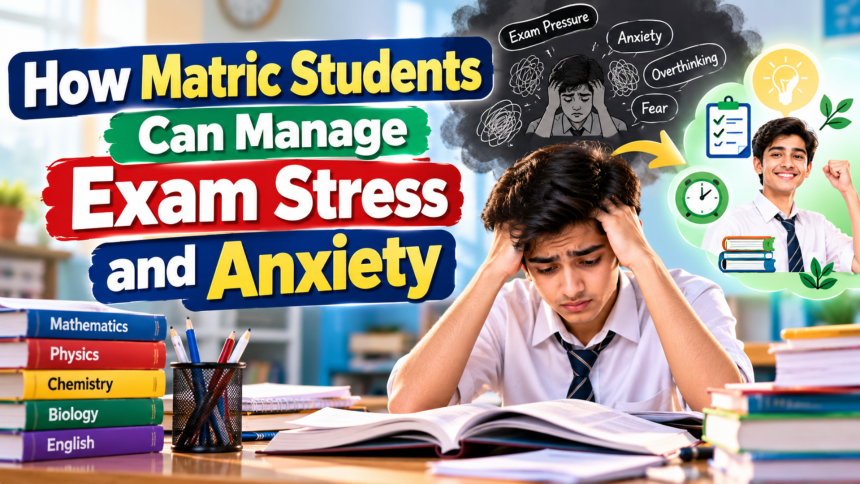
Matric Students Can Manage Exam Stress. Matric examinations can be stressful for students. Preparing for final exams, remembering important topics, and thinking about future results can make students feel nervous. However, feeling anxious before an exam is normal. The good news is that students can manage their stress by following simple daily habits and using effective study techniques.
In this guide, we will explore practical ways to remain calm, improve concentration, and prepare for matric exams with greater confidence.
1. Follow a Proper Study Timetable
A well-planned study timetable can help you stay organized and avoid last-minute stress. Divide your subjects into manageable sections and set a daily target for each subject.

For example, you can study mathematics in the morning, revise science in the afternoon, and practice English questions in the evening. Keep some extra time for difficult topics and revision.

Following a timetable regularly helps you understand your progress and feel more prepared for your exams.
2. Eat Healthy and Balanced Meals
Your brain needs proper nutrition to concentrate and remember information. Try to eat balanced meals that include fruits, vegetables, whole grains, eggs, and other nutritious foods.

Drink enough water throughout the day. Avoid eating too much sugary or heavily processed food, especially when you are studying for long hours.
Healthy eating supports your energy levels and helps you maintain a regular study routine.
3. Get Enough Sleep
Staying awake all night to memorize lessons may seem helpful, but it can leave you tired and less focused during an exam.
Try to maintain a regular sleeping schedule and aim for around eight to ten hours of sleep if you are a teenager. A good night’s sleep supports memory, concentration, and emotional balance.

Instead of studying until the last minute, revise important topics earlier and give your body enough time to rest.
4. Take Short Breaks While Studying
Studying continuously for several hours can make you feel exhausted. Short breaks give your mind time to recover and help you return to your books with better concentration.
One simple method is to study for 25 to 30 minutes and then take a five-minute break. During your break, stretch your body, drink water, or walk around your home.
Avoid spending your entire break scrolling through social media, as this can make it harder to return to studying.
5. Exercise to Reduce Stress
Physical activity can help improve your mood and reduce feelings of tension. You do not need to join a gym or follow a difficult exercise routine.
Walking for 15 to 20 minutes, stretching, or playing an outdoor game can help you feel refreshed. Even a short walk around your neighbourhood can provide a useful break from exam preparation.
6. Replace Negative Thoughts With Positive Ones
Negative thinking can reduce your confidence before an exam. Instead of telling yourself, “I cannot pass this subject,” try saying, “I will prepare carefully and do my best.”
Remember that making mistakes is part of learning. Focus on improving your understanding rather than comparing your progress with other students.
7. Practise Deep Breathing
When you feel nervous, pause for a moment and breathe slowly. Breathe in gently through your nose, then breathe out slowly. Repeat this process several times without forcing your breathing.
You can use this technique before entering the examination hall or whenever you feel overwhelmed while studying.
Conclusion
Remaining calm during matric exams is just as important as preparing your lessons. A proper timetable, healthy meals, enough sleep, regular breaks, exercise, and positive thinking can help you manage exam stress.
Remember, your results matter, but they do not define your entire future. If your anxiety becomes overwhelming or affects your daily life, speak to a trusted family member, teacher, or health professional.