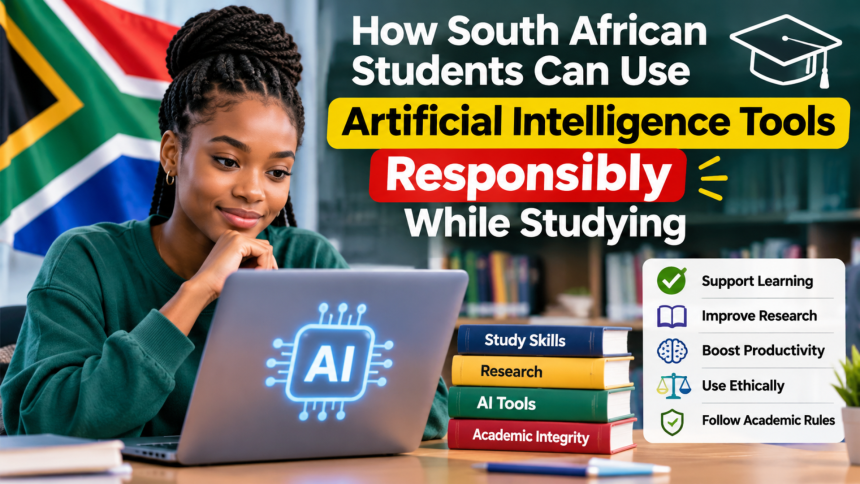
Artificial intelligence tools are now part of student life in South Africa. Many students use them to explain a concept, summarise a reading, plan an assignment or practise for a test. Used well, these tools can save time and make learning clearer. Used badly, they can weaken your understanding and put your academic work at risk. The difference is not the tool itself. It is how you choose to use it.
Responsible use starts with a clear purpose. Before you open an AI tool, decide what you want to learn, not only what you want to finish. Ask it to explain an idea, give you examples, test you or help you organise your notes. When the goal is learning, the tool becomes a study partner. When the goal is only to finish quickly, it is easy to hand over your thinking and learn very little from the work.
Use AI to Understand, Not to Copy
The most useful way to use an AI tool is to build understanding. If a lecture or textbook passage is unclear, ask for a simpler explanation, then read the original material again. Ask for worked examples, compare them with your class notes and try a similar problem on your own. Copying an answer into an assignment may look like progress, but it leaves a gap that will show in tests and exams. Your lecturers want to see your thinking, not an answer you cannot explain. When you can explain an idea in your own words, you know that you have really learned it.

Check Everything AI Tells You
AI tools can sound confident even when they are wrong. They can mix up facts, invent sources or misunderstand a question. Never treat an AI answer as your final source. Check important facts against your textbook, lecture notes, library material or a trusted source your lecturer recommends. If two sources disagree, ask your lecturer or tutor for guidance instead of guessing. This habit also protects your marks. An error copied into an assignment can cost you marks and leave you with a wrong idea that is hard to correct later.
Keep Your Own Voice in Your Work


Your assignments should show your own ideas, effort and understanding. Use AI to brainstorm, organise your points or improve a draft, but write the final version yourself. Keep your notes, drafts and sources so that you can show how your work developed if a lecturer asks. Follow your institution’s rules on AI use and academic honesty, and be open about how you used a tool when you are asked to do so. If you are unsure whether a particular use is allowed, ask before you submit. It is much better to ask a question early than to explain a problem after your work has been marked.
Protect Your Personal Information
Be careful about what you share with an AI tool. Do not paste in your student number, identity number, passwords, banking details or private messages, and avoid uploading personal documents unless you know how the information will be used. The same care applies to other people’s work. Do not share a classmate’s assignment, a lecturer’s unpublished material or confidential group work without permission. Treat an AI tool like a public space: share only what you would be comfortable seeing used in another context. A few seconds of caution can prevent problems that are difficult to undo.
Use AI to Plan and Practise

AI tools can also help you study in a more organised way. Ask for a study plan based on the topics you need to cover, then adjust it to fit your timetable, energy and other commitments. Use the tool to create practice questions, quiz yourself without looking at the answers and review the topics you find hardest. You can also ask it to explain your mistakes and suggest a different way to approach a problem. This kind of practice builds skill because you are still doing the thinking. The tool supports your revision; it does not replace it.
Conclusion
Artificial intelligence can be a helpful study partner when you use it with care. Use it to understand ideas, check your work, plan your study and practise your skills, while keeping your own thinking at the centre of your learning. Check facts, protect your information and follow your institution’s rules. With those habits, you can enjoy the benefits of new technology without losing the knowledge and confidence your studies are meant to build.