IRP5 Registered. When applying for the SASSA Social Relief of Distress (SRD) grant, applicants may sometimes receive a rejection message stating “IRP5 Registered.” This status can be confusing, especially for people who are currently unemployed and believe they should qualify for the grant.
The IRP5-related rejection generally means that information linked to your identity has been detected in the South African Revenue Service (SARS) system, suggesting that you may have received income from employment or another source. Understanding what this status means and how to correct it can help you take the necessary steps before submitting an appeal.
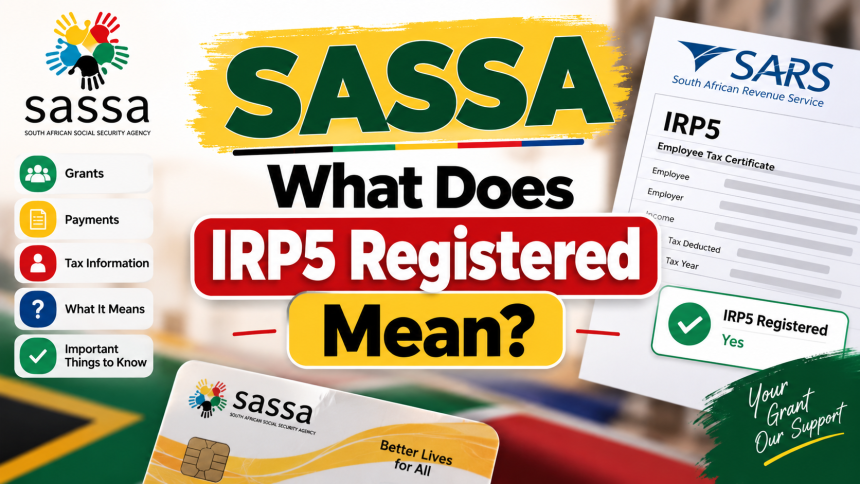
What Does IRP5 Registered Mean?
An IRP5 Registered status means that SASSA’s verification system has identified information indicating that you may have an income recorded against your details.

In simple terms, SASSA may receive information from government databases that suggests you are employed or have received taxable income. Because the SRD grant is intended for eligible people who do not have sufficient income, the system may reject an application if it detects an income record.

However, receiving an IRP5-related rejection does not necessarily mean that you are currently employed. An old employment record, incorrect information, or income reported by a previous employer can sometimes cause this problem.
What Is an IRP5 Certificate?
An IRP5 certificate is an employee tax certificate issued in South Africa. It contains information about income earned by an employee during a particular tax year, as well as the tax and other deductions reported by the employer.

Employers use IRP5 information to report employee earnings to SARS. Employees may also use their IRP5 certificates when completing their annual income tax returns.
The certificate can include details such as:
- Employment income
- Pay-As-You-Earn (PAYE) tax
- Other taxable amounts
- Allowances and deductions
- Employer-reported tax information
Because this information is connected to an individual’s tax record, SASSA can use government verification information when assessing whether an applicant meets the requirements for an SRD grant.
Why Was My SASSA Application Rejected Because of IRP5?
If your SASSA application has been declined because you are IRP5 Registered, the system may have found income information associated with your details.
For example, you may have previously worked for a company, but your former employer could still have reported income information to SARS. In other cases, information may not have been updated correctly after employment ended.
This can create a situation where SASSA’s system believes that you are still earning an income even though you are currently unemployed.
An IRP5 rejection may therefore be caused by:
- Previous employment information still appearing in the SARS system
- Income reported by a former employer
- Incorrect or outdated tax information
- An employer submitting information that needs to be corrected
- Other income information associated with your tax record
It is important to check your SARS records before assuming that the SASSA decision is final.
How Can I Fix an IRP5 Registered Rejection?
If you are unemployed but your SASSA application has been rejected because of an IRP5 or income-related issue, you should first investigate the information recorded with SARS.
Contact SARS and explain that your SASSA application has been rejected because the verification system shows income or employment information that you believe is incorrect or outdated.
SARS may ask you for additional information or supporting documents to investigate the issue. In some situations, information from your previous employer may also be required before the employment or income record can be corrected.
You can contact SARS through its official support channels or use the available online services to manage and check your tax information.
What Should I Do After SARS Updates My Information?
Once the relevant information has been corrected or updated, you should check your SASSA application status again.
If your application remains rejected, eligible applicants may have the option to submit an appeal through SASSA. The appeal allows you to request that your application be reconsidered based on your current circumstances.
When submitting an appeal, make sure the information you provide is accurate and consistent with your current employment and income situation.
Keep in mind that updating SARS information does not necessarily mean that your SASSA status will change immediately. Government systems may require time to exchange or verify updated information.
Can I Appeal an IRP5 Rejection?
Yes, if you believe the rejection is incorrect and you meet the SRD grant requirements, you can use the applicable SASSA appeal process.
Before appealing, it is advisable to make sure that the income information causing the rejection has been investigated. If the issue originates from an outdated or incorrect SARS record, correcting that information can be an important step.
When submitting an appeal, carefully review your personal information and answer all required questions correctly. Providing inaccurate information could delay the assessment of your application.
How Long Does It Take to Resolve an IRP5 Issue?
There is no single timeframe that applies to every IRP5-related case. The time required can depend on the reason for the income record, whether an employer needs to correct information, and how quickly the relevant systems are updated.
Applicants should therefore avoid submitting multiple unnecessary applications while waiting for information to be corrected. Instead, monitor the status of the application and follow the official instructions provided by SASSA and SARS.
Conclusion
An “IRP5 Registered” SASSA rejection generally indicates that the verification process has detected income or employment information connected to your details. It does not automatically prove that you are currently employed.
If you are unemployed and believe the information is incorrect, the best approach is to investigate your tax and employment records with SARS. If an outdated or incorrect record is found, request that the relevant information be corrected. After the issue has been addressed, check your SASSA application again and submit an appeal if you remain eligible and the appeal option is available.
Always use official SASSA and SARS channels when dealing with grant applications, tax records, and personal information. This can help protect you from scams and ensure that your application is handled through the correct process.