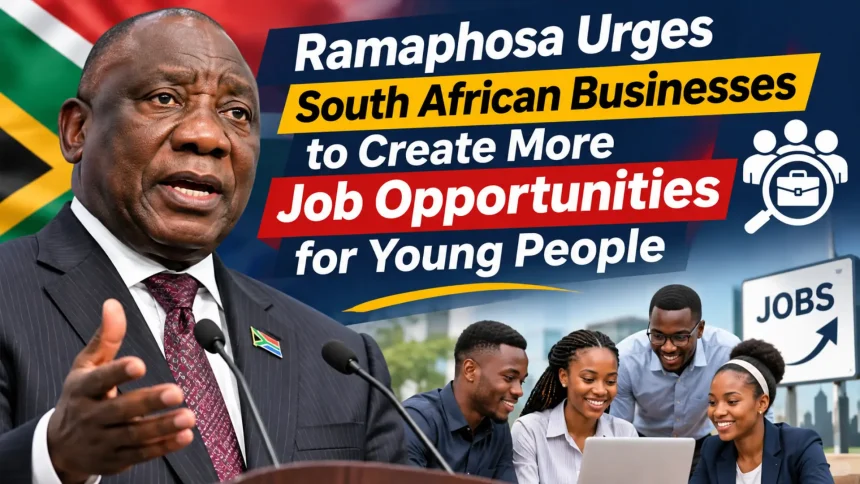
Ramaphosa Urges South African Businesses. South African President Cyril Ramaphosa has urged businesses across the country to take stronger action against youth unemployment by creating more job opportunities, offering workplace training and helping young people gain valuable professional experience. He believes that employers must give young job seekers a fair chance to demonstrate their skills and abilities, even if they have limited work experience.
Speaking at the SA Youth National Leadership Convening at the Galleria Conference Centre in Sandton, Ramaphosa highlighted the importance of cooperation between government, businesses, educational institutions, labour organisations and civil society. He stressed that tackling youth unemployment requires a collective effort and a practical commitment from all sectors of society.
The President also encouraged employers to change their approach to recruitment and stop viewing a lack of experience as a lack of potential. According to him, young people need opportunities to enter the workplace, develop their abilities and build careers.

Businesses Encouraged to Give Young People Their First Job Opportunity
Ramaphosa called on South African companies to open their doors to young job seekers by providing entry-level positions, internships, workplace placements and skills development programmes.

He argued that many talented young people struggle to secure employment simply because employers require previous work experience. This creates a difficult situation for graduates and first-time job seekers who cannot gain experience without being given an initial opportunity.
The President said businesses should recognise the determination and potential of young people rather than focusing only on their employment history.

He also described youth unemployment as more than an economic issue, explaining that it affects individuals, families, communities and the country’s long-term development.
Tackling Youth Unemployment Requires Government and Business Cooperation
The President emphasised that government cannot solve youth unemployment independently. Businesses, educational institutions, communities and young people must all contribute to creating a stronger employment environment.
Government is expected to support economic growth, encourage investment and remove barriers that prevent businesses from expanding. Meanwhile, private companies should invest in productive industries, recruit young workers and provide practical workplace learning opportunities.
Educational institutions must also ensure that students receive relevant knowledge and skills that match the requirements of the modern job market.

Ramaphosa highlighted the Government-Business Partnership as an important example of cooperation that can improve economic conditions and encourage investment. He called for similar commitment and collaboration to address youth unemployment.
Youth Employment Programmes Aim to Create Better Career Opportunities
Ramaphosa highlighted several government-supported initiatives designed to connect young South Africans with employment, training and career development opportunities.
These include:
- Presidential Youth Employment Intervention.
- SA Youth Pathways Network.
- Youth Employment Service (YES).
- Public employment programmes supporting communities and essential services.
These initiatives help young people gain practical experience while contributing to important areas such as education, food security, community safety and environmental protection.
However, the President explained that temporary employment should not be the final destination for young participants. Instead, these programmes should help them move towards permanent employment, further education, professional training or entrepreneurship.
He also called for stronger cooperation between businesses, Sector Education and Training Authorities (SETAs) and Technical and Vocational Education and Training (TVET) colleges.
Companies should help identify skills shortages, support training programmes and provide workplace learning opportunities. TVET colleges must ensure that graduates develop practical skills that employers need.
Technical and Vocational Skills Can Help Young People Find Employment
The President also encouraged young South Africans to consider vocational and technical careers as valuable employment options.
South Africa needs skilled workers in several industries, including construction, engineering, agriculture, manufacturing and infrastructure development.
Careers such as electricians, mechanics, artisans, technicians, builders and agricultural specialists offer opportunities for young people to develop practical skills and contribute to economic growth.
Strengthening technical education and workplace training can help close the skills gap while preparing young people for available employment opportunities.
More Support Needed for Young Entrepreneurs
Apart from traditional employment, Ramaphosa wants government and businesses to provide greater support to young entrepreneurs who want to establish and grow their own businesses.
Many young business owners in townships and rural communities have innovative ideas but struggle to access funding, customers, infrastructure and business development assistance.
The President encouraged established companies to create opportunities for youth-owned businesses by offering contracts, opening supply chains and providing mentorship.
He explained that financial grants are not always the only solution for small businesses. Access to customers, markets and business contracts can also make a significant difference.
Industries such as tourism, agriculture, manufacturing, infrastructure, digital services, the green economy and creative industries were identified as sectors with potential to create employment and encourage entrepreneurship.
President Calls for Practical Action on Youth Employment
Ramaphosa also highlighted the importance of implementing the Work SA Youth Implementation Plan to coordinate youth employment initiatives and expand successful programmes.
He urged business leaders to identify realistic opportunities within their organisations and industries. Industry associations should also encourage smaller businesses to participate in workplace training and entry-level recruitment.
Government departments, educational institutions and employers must work together to remove barriers and strengthen partnerships.
The President stressed that progress should be measured through practical results rather than announcements and promises. Programmes that deliver positive outcomes should be expanded, while those that fail to achieve their objectives should be reviewed and improved.
Conclusion
President Cyril Ramaphosa’s message is clear: South Africa needs more businesses to participate actively in reducing youth unemployment. Young people need opportunities to gain experience, develop professional skills, earn an income and build successful careers.
By investing in workplace training, internships, entry-level employment and youth-owned businesses, companies can contribute to a stronger economy and a more inclusive future.