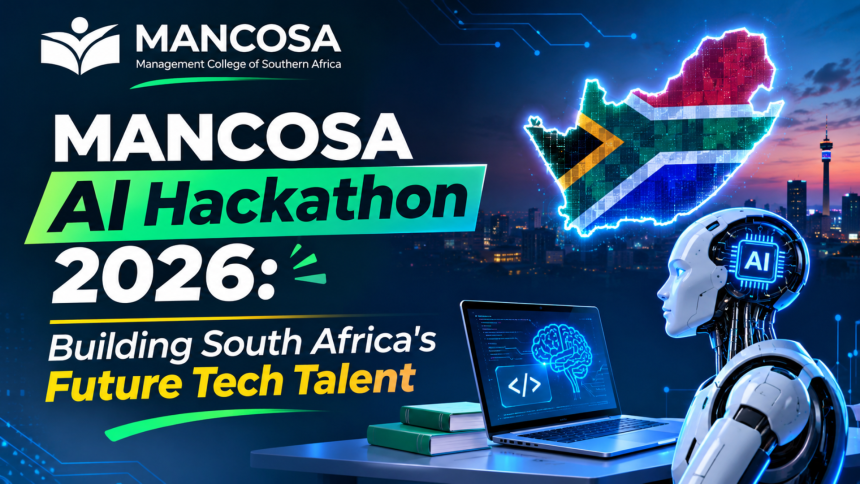
Artificial intelligence is becoming an important part of everyday life, from education and banking to business and public services. To help young people understand and use these technologies, MANCOSA hosted its 2026 Hackathon at its Auckland Park campus in Johannesburg.
The event brought together students, technology experts, industry mentors, and professionals to work on real problems facing South African communities. Participants were encouraged to use their technical knowledge, creativity, and problem-solving skills to develop practical solutions.
Held on October 23 and 24, 2026, the MANCOSA Hackathon focused on using technology and innovation to address social and economic challenges. The event received 800 applications, but only 80 participants were selected to take part.

Why MANCOSA Is Preparing Students for an AI-Driven Future
Artificial intelligence is changing how people work, study, communicate, and access services. For South Africa, these changes bring new opportunities, especially in education, business, healthcare, and infrastructure.
However, the country also faces challenges such as youth unemployment, unequal access to education, and limited internet connectivity in some communities.
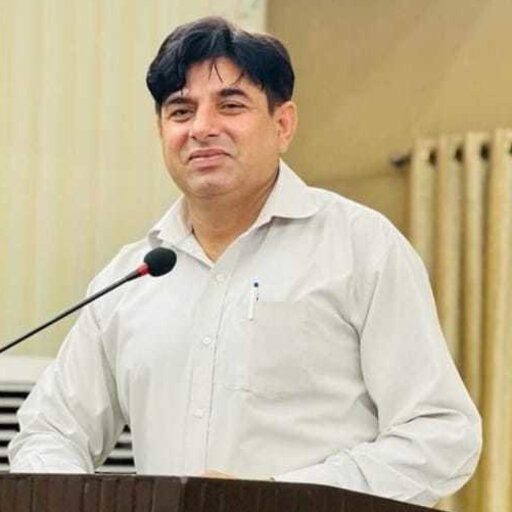
Farad Chohan, School Manager of the MANCOSA School of Information and Digital Technology (SIDT), believes that higher education institutions have an important role in preparing students for these changes.

According to Chohan, students need more than classroom knowledge. They must learn how to create technology, solve problems, and understand how their work can benefit society.
MANCOSA is working towards this goal by including digital skills, applied artificial intelligence, and responsible innovation in its educational programmes.
MANCOSA Hackathon 2026: Event Details
The two-day event was organised by MANCOSA’s School of Information and Digital Technology.
Its theme was Solving Complex Challenges Through Technology and Innovation. Students worked with industry mentors and technology specialists to develop solutions to different real-world problems.

Here are the main details of the event:
| Event Details | Information |
|---|---|
| Event Name | MANCOSA AI Hackathon 2026 |
| Institution | MANCOSA |
| Event Dates | October 23 and 24, 2026 |
| Venue | Auckland Park Campus |
| Location | Johannesburg, South Africa |
| Total Applications | 800 |
| Selected Participants | 80 |
| Organising Department | School of Information and Digital Technology |
| Main Theme | Solving Complex Challenges Through Technology and Innovation |
Participants were asked to identify problems, research possible answers, build working prototypes, and present their ideas to judges.
Technology Projects Focused on Real Community Problems
The Hackathon included nine challenges connected to three United Nations Sustainable Development Goals.
These goals were:
- SDG 4: Quality Education: Improving access to learning through technology.
- SDG 9: Industry, Innovation and Infrastructure: Developing better technological and infrastructure solutions.
- SDG 11: Sustainable Cities and Communities: Finding ways to make communities safer and more sustainable.
Students explored ideas such as AI-powered educational tools, offline learning applications, cold-chain monitoring for small retailers, water-leak detection, and systems to address illegal dumping.
These projects showed how technology can help solve problems that people face in their daily lives.
Industry Experts Helped Students Develop Practical Skills
MANCOSA arranged several masterclasses two weeks before the event. Industry professionals shared their knowledge and helped participants understand different areas of technology.
Sam Ngobeni from Startup Grind Johannesburg discussed design thinking. Chris Ainslie from FirstCore.AI spoke about data sovereignty and locally sustainable technology.
Sarah Findlay from Open Cities Lab explained responsible technology development, while Adam Lin from Sheen Robotics introduced prototyping methods.
Other contributors included Ming Ai from PROPELLER, who discussed China’s AI innovation landscape, and Mishka Singh from MANCOSA, who covered intellectual property and ethical issues.
Raeesa Ebrahim from MANCOSA’s iTeach Lab introduced virtual reality learning experiences. Weich Malan from Many Worlds and Malcolm Haefner from First Technology also shared their knowledge about innovation and the role of AI in modern workplaces.
These sessions helped students understand that successful technology must be useful, safe, and suitable for the people who use it.
Senzani Smart Vest Wins the Hackathon
One of the main highlights of the event was the winning project, called the Senzani Smart Vest.
The team developed a wearable technology prototype designed to improve women’s personal safety.
The idea focused on one of South Africa’s serious social challenges, gender-based violence. The project explored how technology could help women feel safer when moving around public spaces.
The team drew inspiration from the death of Elizabeth “Tsontso” Moselakgomo, a Kempton Park runner who disappeared and was later found dead in September 2026.
Her death affected running communities and brought further attention to women’s safety.
The winning participants received prizes, including cash, robotics kits, and technology devices. MANCOSA and its industry partners sponsored these awards.
Industry Partnerships Supported the Event
Several organisations supported the MANCOSA Hackathon through mentorship, educational sessions, judging, and prizes.
The participating partners included:
- Vodacom Business
- Datacentrix
- First Technology
- Sheen Robotics
- Many Worlds
- Open Cities Lab
- Startup Grind Johannesburg
- ICITP
- DotNext
These partnerships helped students connect their classroom learning with the skills and expectations of the technology industry.
Farad Chohan highlighted that South Africa needs graduates who can create and manage new technologies rather than simply depend on solutions developed in other countries.
MANCOSA Plans for an Inclusive Digital Future
The 2026 Hackathon showed how students can use their knowledge to address important problems in South African communities.
From improving women’s safety to supporting learners without reliable internet access, the projects demonstrated that technology can make a difference when it is developed with real people in mind.
Conclusion
MANCOSA plans to continue expanding opportunities for applied AI learning and industry collaboration. The institution aims to prepare students to work confidently with new technologies while understanding their social responsibilities.
As artificial intelligence continues to change the world, practical learning and industry experience will become increasingly important.
The MANCOSA AI Hackathon 2026 gave students an opportunity to turn their ideas into working projects and take an active role in building South Africa’s digital future.