
eThekwini Municipality Unemployment. The eThekwini Municipality has recorded a significant improvement in employment levels, achieving the lowest official unemployment rate among South Africa’s metropolitan municipalities, according to the latest Quarterly Labour Force Survey (QLFS) released by Statistics South Africa (Stats SA).
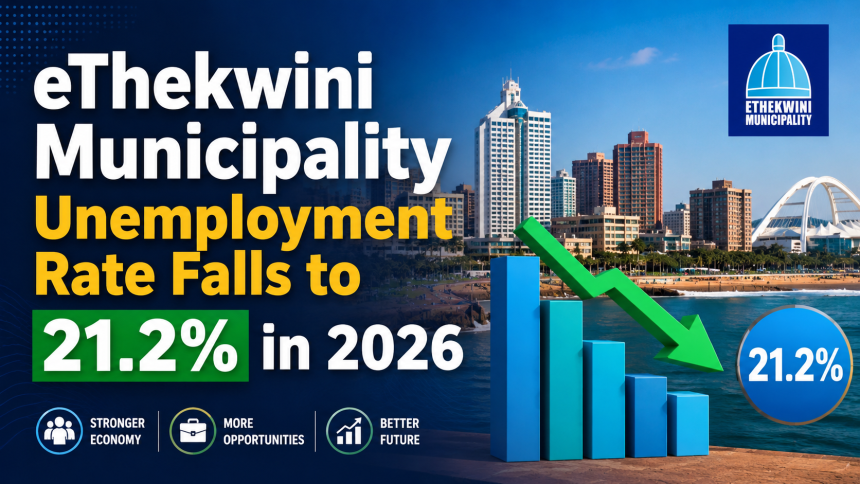
The QLFS results for the second quarter of 2026, covering the period from April to June, show that eThekwini’s unemployment rate declined to 21.2%. The figure places the municipality ahead of other major metropolitan areas, including Cape Town, which recorded an unemployment rate of 21.9%.
The improvement is particularly notable when compared with South Africa’s national unemployment rate of 33.6% during the same period. The latest figures indicate that eThekwini has made considerable progress in expanding employment opportunities and improving labour market conditions.

eThekwini Unemployment Rate Shows Major Improvement
One of the most significant aspects of the latest QLFS results is the sharp year-on-year decline in eThekwini’s unemployment rate.

During the second quarter of 2025, the municipality recorded an unemployment rate of 26.8%. By the second quarter of 2026, this had fallen by 5.6 percentage points to 21.2%.
According to the municipality, this represents the largest decline in unemployment recorded by any South African metropolitan municipality over the period.

eThekwini Mayor Councillor Cyril Xaba welcomed the figures, saying they demonstrate the impact of efforts focused on infrastructure development, investment facilitation, industrial growth and tourism.
The mayor also acknowledged that the latest figures should not be viewed as the end of the city’s employment challenges. More than 340,000 residents remain unemployed, highlighting the need for continued economic development and job creation.
The municipality believes that maintaining investment and supporting key industries will be important for ensuring that the positive employment trend continues.
90,000 More Residents Employed
Another major development highlighted in the QLFS results is the increase in the number of employed people living in eThekwini.

The number of employed residents reached approximately 1.29 million during the second quarter of 2026. This represents an increase of around 90,000 employed people compared with the same quarter in 2025.
At the same time, the number of unemployed residents declined significantly. According to the municipality, unemployed residents fell by approximately 92,000 to 347,000.
This means that eThekwini recorded declines in unemployment both quarter-on-quarter and year-on-year, making it one of the strongest-performing metropolitan labour markets in the country.
The increase in employment also contributed to an improvement in the city’s absorption rate.
Absorption Rate Rises to 46.9%
The employment absorption rate is another important measure of labour market performance. It shows the proportion of the working-age population that is employed.
In eThekwini, the absorption rate increased to 46.9% during the second quarter of 2026, compared with 44.2% during the same period in 2025.
The increase of 2.7 percentage points represented the largest improvement among South Africa’s metropolitan municipalities.
A higher absorption rate indicates that a greater proportion of working-age residents are participating in employment. For eThekwini, the improvement suggests that the city’s labour market has become more active over the past year.
However, the municipality continues to face the challenge of ensuring that economic growth translates into sustainable employment opportunities for people across different communities.
Formal Sector Supports Employment Growth
The formal sector played an important role in eThekwini’s employment growth during the second quarter of 2026.
Approximately 948,000 people were employed in the formal sector during the period. This was an increase of about 32,000 jobs compared with the previous quarter.
Growth in formal employment is particularly important because formal jobs generally provide more structured employment arrangements and can contribute to household income stability and broader economic activity.
The municipality has identified investment, infrastructure development, industrial activity and tourism as important areas for supporting employment growth.
Strengthening these sectors could help businesses expand while creating additional opportunities for job seekers.
Investment and Infrastructure Remain Key Priorities
The eThekwini Municipality has indicated that it will continue focusing on investment and infrastructure as part of its economic development strategy.
Infrastructure investment can support employment both directly and indirectly. Construction and development projects can create jobs while improved infrastructure can make it easier for businesses to operate, expand and attract new investment.
The municipality also plans to strengthen investment facilitation and encourage private-sector participation.
Small businesses are another important part of the city’s employment strategy. Supporting entrepreneurs and small enterprises can help create additional employment opportunities while encouraging local economic activity.
Tourism and Industry Could Create More Jobs
Tourism remains an important part of eThekwini’s economy, particularly because Durban is a major tourism destination in South Africa.
The municipality has highlighted support for the tourism sector as one of the areas that can contribute to employment creation. Tourism-related businesses, including hospitality, transport, entertainment and retail, can provide opportunities for both skilled and entry-level workers.
Industrial development is also expected to remain important. A stronger industrial base can attract investment, support supply chains and create employment across multiple sectors.
The combination of tourism, industry, infrastructure and small-business development could therefore play a major role in sustaining eThekwini’s recent employment gains.
Unemployment Remains a Major Challenge
Despite the positive QLFS results, eThekwini still faces significant unemployment challenges.
Approximately 347,000 residents were unemployed during the second quarter of 2026. This means that a large number of people continue to search for work despite the improvement in the overall unemployment rate.
The municipality has therefore stressed that the latest figures should be viewed as progress rather than a final achievement.
Creating enough jobs to accommodate new entrants into the labour market will require continued investment, business growth and cooperation between government and the private sector.
What the Latest QLFS Figures Mean for eThekwini
The second-quarter 2026 QLFS results provide an encouraging picture of eThekwini’s labour market. The unemployment rate has fallen substantially, employment has increased by around 90,000 people over the year, and the absorption rate has reached 46.9%.
The municipality’s performance is particularly notable because its unemployment rate of 21.2% was below that of other major metropolitan municipalities and well below the national rate of 33.6%.
Nevertheless, the city still has a considerable task ahead. Hundreds of thousands of residents remain unemployed, and continued economic growth will be necessary to create sustainable opportunities.
Conclusion
For eThekwini residents, the latest figures offer a positive indication that employment conditions are moving in the right direction. The municipality’s continued focus on infrastructure, investment, tourism, industry, small businesses and private-sector partnerships could help build on this progress.
Overall, the QLFS results suggest that eThekwini has made meaningful progress in reducing unemployment during 2026. Maintaining this momentum will be crucial to ensuring that more residents can access stable employment and participate in the city’s economic growth.