
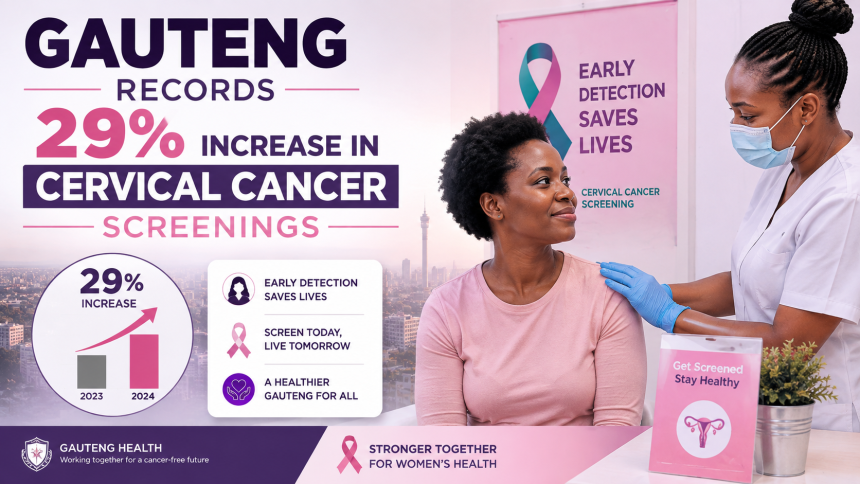
Gauteng Records 29% Increase. Gauteng has recorded a significant increase in cervical cancer screening among women, with almost 200,000 women accessing screening services during the 2025/26 financial year. The development highlights growing awareness of cervical cancer prevention and the importance of making essential healthcare services accessible to women across the province.
According to the Gauteng Department of Health, 198,611 women were screened for cervical cancer during the 2025/26 financial year, compared with 153,703 women during the previous financial year. This represents an increase of 44,908 women, or approximately 29%.
The rise comes as South Africa commemorates the 70th anniversary of the historic 1956 Women’s March. The Gauteng Department of Health has used the occasion to highlight the importance of women’s access to healthcare information, preventive services and early detection programmes.

Nearly 200,000 Women Accessed Screening Services
The increase in screening numbers is being viewed as an encouraging development in Gauteng’s efforts to prevent cervical cancer. Screening allows healthcare professionals to identify abnormal changes in the cervix before they develop into cancer.

Early detection is particularly important because cervical cancer may not cause noticeable symptoms during its early stages. Regular screening can therefore help women identify potential health concerns before they become more serious.
Gauteng MEC for Health and Wellness Faith Mazibuko said the increase demonstrates the impact of improving women’s access to health information and healthcare services.

She linked the province’s current efforts to the legacy of the women who participated in the 1956 Women’s March, emphasising that women’s empowerment also includes taking responsibility for their health and accessing services that can potentially save lives.
Awareness Campaigns Help Increase Screening
The Gauteng Department of Health attributed the growth in cervical cancer screening partly to awareness campaigns conducted across all five provincial health districts.
These campaigns were introduced from the third quarter of the 2025/26 financial year and focused on informing women about the importance of cervical cancer screening and prevention.
The West Rand recorded the largest improvement in screening uptake. At the same time, Ekurhuleni has been identified as an area where additional targeted interventions may be required to encourage more women to access screening services.

The department plans to continue its awareness activities during the 2026/27 financial year. Health officials are also expected to strengthen community-level education so that women can receive accurate information closer to where they live.
Cervical Cancer Remains a Major Health Concern
Cervical cancer continues to be a major public health challenge in sub-Saharan Africa. The World Health Organization’s Regional Office for Africa has previously highlighted the high burden of cervical cancer across the continent.
The disease is largely preventable through HPV vaccination and regular screening. Human papillomavirus, commonly known as HPV, is responsible for most cases of cervical cancer.
When abnormal cervical changes are detected early and treated appropriately, the chances of preventing the development of cervical cancer are significantly improved. Early diagnosis and treatment can also improve outcomes for women who have already developed the disease.
Gauteng Expands HPV Vaccination Efforts
Cervical cancer screening is only one part of Gauteng’s broader prevention strategy. The province is also continuing its HPV vaccination campaign.
The programme targets eligible Grade 5 girls aged nine years and older, helping protect them against high-risk HPV types associated with cervical cancer later in life.
During the 2025/26 implementation period, 72,249 Grade 5 girls were vaccinated at public schools, while another 9,740 girls received vaccination at independent schools.
The continued focus on HPV vaccination is important because vaccination at an appropriate age can provide protection before exposure to HPV. Schools and parents therefore play an important role in ensuring eligible girls have access to the programme.
Who Can Access Cervical Cancer Screening?
Gauteng’s cervical cancer screening programme includes different age recommendations depending on a woman’s HIV status.
Under the programme, HIV-negative women are screened at ages 30 and 50, while women living with HIV are eligible for cervical cancer screening from the age of 20.
Women are encouraged to follow the screening guidance provided by healthcare professionals and to attend appointments even when they feel healthy. Cervical cancer and precancerous changes may not always produce obvious symptoms.
Symptoms Women Should Not Ignore
Although screening is important even when there are no symptoms, women should seek medical attention if they experience unusual changes.
Possible warning signs can include abnormal vaginal bleeding, including bleeding after sexual intercourse, bleeding between periods or bleeding after menopause. Women should also seek medical advice for unusually heavy or prolonged periods, unusual vaginal discharge, pain during sex or persistent lower abdominal pain.
Experiencing these symptoms does not automatically mean a woman has cervical cancer, but they should be assessed by a qualified healthcare professional.
Community Health Teams to Support Awareness
The Gauteng Department of Health plans to strengthen community education through Ward-Based Primary Health Care Outreach Teams.
These teams will receive training to provide information about cervical cancer prevention and screening during household visits. This approach can help reach women who may not regularly visit healthcare facilities or who may have limited access to information about available services.
Community-based education can also help address misconceptions and encourage women to discuss screening with healthcare workers.
Women Encouraged to Prioritise Their Health
The 29% increase in cervical cancer screenings represents progress for Gauteng, but health officials say more work remains necessary to ensure eligible women have access to preventive services.
The department is encouraging women to make cervical cancer screening part of their regular healthcare routine and to encourage friends, relatives and other women in their communities to do the same.
Parents and caregivers are also being encouraged to complete and return HPV vaccination consent forms promptly so that eligible girls do not miss the opportunity to receive protection.
Conclusion
As Gauteng moves into the 2026/27 financial year, continued awareness campaigns, community outreach, HPV vaccination and accessible screening services will remain important tools in the fight against cervical cancer. The increase to nearly 200,000 screenings shows that awareness can make a meaningful difference, while continued participation from women, families, schools and healthcare workers can help strengthen prevention efforts across the province.