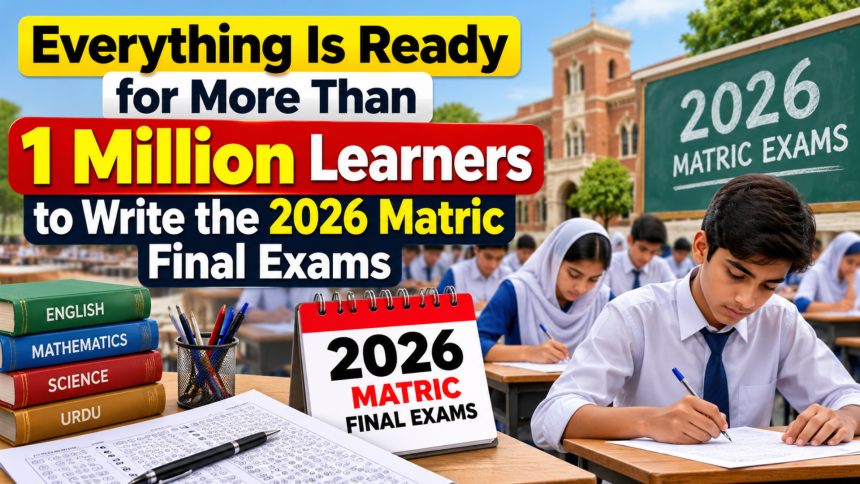
More Than 1 Million Learners to Write Matric Final Exams. South Africa is preparing for the 2026 Matric final examinations, with Umalusi confirming that the examination system is broadly ready. More than one million candidates are expected to sit for national examinations at thousands of examination centres across the country. Officials have also promised close monitoring to help ensure that exams are conducted fairly and without unnecessary disruptions.
Umalusi Confirms Readiness for the 2026 Exams
Umalusi, South Africa’s quality assurance body for education and examinations, has confirmed that preparations for the 2026 year-end examinations are largely complete.
According to Umalusi CEO Dr Mafu Rakometsi, a readiness audit was conducted between 24 August and 30 September 2026. The examinations are scheduled to begin on 13 October 2026.

The audit reviewed the systems and arrangements needed to conduct, administer and manage the examinations. Umalusi reported that the preparations were broadly satisfactory, with approximately 1.08 million candidates expected to participate across 9,183 examination centres.

The examinations include the National Senior Certificate (NSC), the National Certificate (Vocational) Level 4 and the General Education and Training Certificate for Adult Basic Education and Training.
Measures in Place to Prevent Examination Irregularities
Umalusi has stressed that examination bodies must take the necessary steps to prevent cheating and other irregularities. Officials will monitor the examination process and address any problems according to the relevant examination regulations.
Candidates have also been warned against using dishonest methods to gain an unfair advantage. Umalusi has encouraged learners to focus on preparation, hard work and academic honesty.
These measures aim to protect the credibility of the examinations and ensure that candidates are assessed fairly.
Registered Learners Must Be Allowed to Write
Umalusi has raised concerns about schools that prevent registered learners from writing particular examination subjects. This practice may be used by some schools in an attempt to improve their overall examination results.
Dr Rakometsi has urged schools and principals to ensure that every eligible, registered candidate is allowed to write their examinations.
Learners and their parents or guardians are encouraged to report any incident in which a registered candidate is unfairly prevented from sitting an examination. Such concerns should be reported promptly to the relevant education authorities.
Examination Timetable Adjusted for Local Government Elections
The 2026 examination period will overlap with South Africa’s Local Government Elections, scheduled for 4 November 2026. To accommodate the elections, the examination timetable has been adjusted.
Umalusi has warned that political activities and community protests could affect examination centres, particularly in areas near schools. The organisation will work with assessment bodies, provincial education departments and other stakeholders to reduce possible disruptions.
The goal is to ensure that candidates can complete their examinations according to the revised timetable.
Communities Asked to Support Matric Candidates
Umalusi has called on parents, teachers, school principals, political leaders and community members to support learners throughout the examination period.
Some schools will continue holding extra classes on weekends and during school holidays. Schools that serve as voting stations may face additional challenges while preparing candidates.
Community members are therefore encouraged to minimise noise, protests and other activities that could disturb learners near examination centres.
Conclusion
With preparations largely complete, Umalusi has expressed confidence in the arrangements for the 2026 final examinations. Learners should continue studying, follow examination rules and arrive prepared for each paper. Support from schools, families and communities will also be important in helping candidates complete this important stage of their education successfully.