Jobs At Gauteng Government. Finding a government job can be an excellent career opportunity for people looking for professional growth, job stability, and the chance to contribute to their communities. The Gauteng Government regularly advertises vacancies across different departments and institutions, including health, education, finance, infrastructure, administration, and other public services. However, applicants need to follow the correct application process and carefully review each vacancy before submitting their documents.
If you are interested in working for the Gauteng Government, this guide explains how to search for vacancies, check the requirements, register an account, and submit your application successfully.
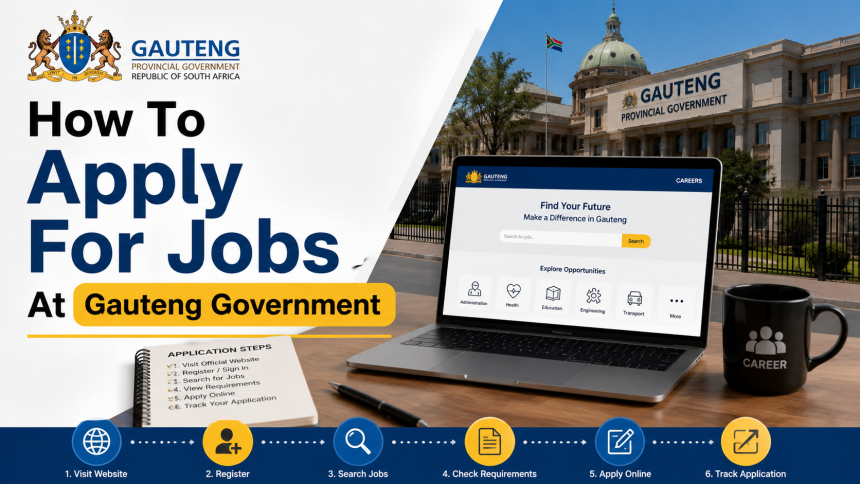
Visit the Official Gauteng Government Careers Page
The first step is to visit the official Gauteng Government careers or vacancies page. This is where applicants can find current employment opportunities advertised by different provincial departments.

It is important to use the official government website when searching for vacancies. Job advertisements may contain important information about eligibility, qualifications, salary packages, closing dates, application procedures, and required documents.

Before applying, make sure the vacancy is still open and that you meet the minimum requirements.
Search For Available Government Jobs
Once you reach the careers section, you can search for suitable vacancies using the available search options. If you already have a particular position in mind, enter the job title or a related keyword in the search bar.

For example, you might search for terms such as:
- Administrative Clerk
- Assistant Director
- Human Resources
- Finance
- Nurse
- Information Technology
- General Worker
- Supply Chain Management
You can also browse the Latest Jobs section to see recently advertised opportunities. Each vacancy normally provides basic information such as the position title, department, salary or package, and closing date.
Check The Job Advertisement Carefully
Finding a vacancy that matches your interests is only the beginning. Before starting your application, open the complete job advertisement and read all the information carefully.
The detailed vacancy information may include the reference number, directorate, number of available posts, employer, location, duties, requirements, and contact information.

The requirements section is particularly important. It explains the qualifications, skills, experience, knowledge, and other conditions applicants must meet. Do not apply simply because the job title looks suitable. Compare your qualifications and experience with the advertised requirements first.
The advertisement may also explain the duties you will perform if appointed. Understanding these responsibilities can help you determine whether the position is appropriate for your skills and career goals.
Pay Attention To The Closing Date
Always check the closing date before preparing your application. Government vacancies can receive a large number of applications, and late applications are generally not considered.
It is better to submit your application several days before the deadline rather than waiting until the final day. This gives you time to correct mistakes, upload documents, or resolve account-related problems.
Also check whether the advertisement specifies a particular application method. Follow the instructions provided in the vacancy rather than assuming that every government position uses exactly the same process.
Prepare Your Application Documents
Applicants should prepare all required documents before starting the online application. A detailed and up-to-date CV is usually an important part of a government job application.
For vacancies that require it, applicants may also need to complete the official Z83 application form. Make sure the information on your application form matches the information in your CV and other documents.
Depending on the vacancy, supporting documents may include educational certificates, proof of qualifications, identification documents, professional registrations, or other evidence specifically requested in the advertisement.
If certification of documents is required, ensure that the documents meet the stated requirements. Missing or incorrectly submitted documents can result in an application being excluded from consideration.
Create An Account Or Log In
After selecting a suitable vacancy, look for the Apply Now! option if the position is available for online applications.
Existing users can normally log in using their registered details. New applicants may need to create an account before continuing.
During registration, provide accurate personal information and keep your login details secure. Make sure the information entered into your profile is correct because it may be used as part of the application process.
Complete The Online Application
Once logged in, carefully complete each section of the application. Provide truthful information about your education, employment history, skills, and experience.
Do not leave important sections incomplete unless they are clearly optional. Review your answers before moving to the next stage.
Where the vacancy asks for a reference number or specific information, enter it exactly as shown in the job advertisement. Small errors can create problems when applications are being processed.
Upload all documents requested by the employer and make sure the files are readable. Before submitting, check that you have selected the correct documents for the correct vacancy.
Review Your Application Before Submission
A final review is one of the most important steps. Check your name, contact information, qualifications, employment history, reference number, and uploaded documents.
Also make sure that your CV is professional and relevant to the position. Remove unnecessary information and highlight qualifications and experience that demonstrate your suitability for the advertised role.
Once you are satisfied that everything is correct, submit the application before the closing date.
Keep Your Application Information
After submitting an application, keep a record of the vacancy details, reference number, closing date, and any confirmation provided by the application system.
Government departments may receive many applications, so applicants should not assume that every submission will result in an interview. The vacancy advertisement may explain how shortlisted candidates will be contacted.
Some advertisements also state that applicants who do not receive communication within a specified period should consider their application unsuccessful.
Final Tips For Gauteng Government Job Applicants
To improve your chances of submitting a successful application, always read the full vacancy advertisement before applying. Make sure you meet the minimum requirements, prepare a clear CV, complete the required application form, provide accurate information, and submit all requested documents.
Most importantly, avoid waiting until the last minute. Applying early gives you enough time to deal with technical issues and review your information properly.
Conclusion
Applying for jobs at the Gauteng Government can be a straightforward process when you understand the required steps. Start by visiting the official careers page, search for suitable vacancies, read the complete job advertisement, check the requirements and closing date, and prepare all necessary documents.
New applicants may need to register an account, while existing users can log in and proceed with their applications. Carefully complete every section, upload the required documents, review your information, and submit your application before the deadline.