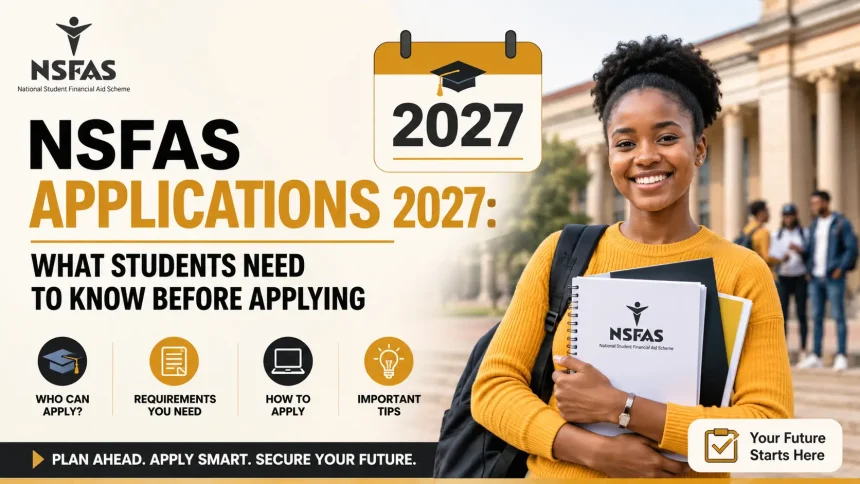
NSFAS Applications 2027. For many South African students, finding a way to pay for higher education is one of the biggest challenges after finishing school. Tuition fees, accommodation, food, transport and study materials can quickly become expensive. This is where the National Student Financial Aid Scheme (NSFAS) plays an important role.
NSFAS provides financial assistance to eligible students who want to study at public universities and Technical and Vocational Education and Training (TVET) colleges in South Africa. If you are planning to start or continue your studies in 2027, understanding the NSFAS application process, eligibility requirements, funding coverage and appeal procedure can help you prepare early.
When Will NSFAS Applications for 2027 Open?
Students planning to apply for NSFAS funding for the 2027 academic year should begin preparing their documents well in advance.

Based on previous application cycles, the NSFAS 2027 application period is expected to open around September 2026. However, students should not rely solely on previous years’ dates because application periods can change.

The safest approach is to regularly check the official NSFAS website and your myNSFAS account for announcements about the opening and closing dates.
Preparing early is particularly important because thousands of students apply for financial aid each year. Having your personal information and supporting documents ready can make the application process easier and reduce the risk of missing the deadline.
Who Can Apply for NSFAS Funding?

NSFAS funding is primarily available to South African citizens and eligible permanent residents who intend to study at a public university or TVET college.
One of the most important requirements is the household income threshold. Generally, applicants from households with a combined annual income of R350,000 or less may qualify for NSFAS funding.
Students living with disabilities may qualify under a higher household-income threshold of up to R600,000 per year, subject to the applicable requirements.
Students receiving certain SASSA grants may also qualify automatically without undergoing the standard household-income assessment. Applicants should nevertheless provide accurate information and follow the application instructions provided by NSFAS.

Because eligibility rules can change, students should always confirm the latest requirements before submitting an application.
What Is the Missing Middle Bursary?
Students whose household income is above the standard NSFAS threshold may still have another funding option.
A separate bursary option is available for some students from households earning up to approximately R600,000 per year. This type of assistance is commonly associated with the “missing middle” category.
Unlike standard NSFAS comprehensive funding, this option may focus primarily on tuition fees and may not provide the same range of allowances. Eligibility and application arrangements can also differ.
Students who do not qualify for traditional NSFAS funding because their household income is too high should therefore investigate other bursaries and financial-aid opportunities available through their institution.
What Does NSFAS Cover?
For qualifying students, NSFAS can provide substantial financial support during their studies.
The funding may cover tuition fees and, depending on the student’s circumstances and applicable rules, various allowances. These allowances can help students manage some of the additional expenses associated with studying away from home.
Potential areas of support may include:
- Tuition and registration fees
- Accommodation
- Meals
- Transport
- Learning materials
- Personal care or related allowances
The exact funding package can depend on the student’s institution, study circumstances and NSFAS rules for the relevant academic year.
Students should also remember that funding arrangements and allowance values can change. Therefore, it is important to check the latest official information instead of relying on figures from previous years.
Keep Your myNSFAS Information Updated
Applicants should make sure their myNSFAS profile contains accurate and up-to-date information.
This includes personal details, contact information and banking information where required. NSFAS has increasingly moved towards making allowance payments directly into students’ bank accounts in applicable circumstances.
Incorrect or outdated banking information could potentially cause payment problems. Students should therefore check their profile carefully and update their details when necessary.
It is also a good idea to regularly check the status of your application rather than waiting for someone else to notify you about an outcome.
What Happens If Your NSFAS Application Is Declined?
Receiving a declined NSFAS application can be disappointing, but it does not necessarily mean that you have no further options.
Eligible students generally have an opportunity to appeal an unsuccessful application. According to the provided guidance, students have 30 days from receiving their funding outcome to submit an appeal through myNSFAS.
The appeal process is completed online, so applicants do not normally need to complete a separate physical appeal form.
Before submitting an appeal, carefully read the reason given for the unsuccessful outcome. Common reasons can include household income being above the applicable threshold or problems with supporting documentation.
If a document is missing, incorrect or does not adequately support your application, addressing that issue can be an important part of the appeal.
How to Prepare for NSFAS 2027 Applications
Students can take several steps now to make their application process smoother.
First, check that your personal information is correct. Next, gather the documents that NSFAS requires and make sure the information provided across your documents is consistent.
You should also create or maintain your myNSFAS account and use reliable contact details. Keep an eye on official announcements for the exact application opening and closing dates.
Most importantly, apply before the official deadline. Waiting until the final days can create unnecessary problems if you experience technical issues or discover that a required document is missing.
Conclusion
NSFAS can make higher education more accessible for thousands of qualifying students across South Africa. For students planning to study in 2027, early preparation is one of the best ways to avoid unnecessary delays and mistakes.
Although the NSFAS 2027 application period is expected to begin around September 2026 based on previous cycles, students should confirm the official dates once they are announced. Understanding the income requirements, funding coverage, documentation and appeal process can help applicants make informed decisions.
If your NSFAS application is unsuccessful, carefully review the reason and consider submitting an appeal within the applicable deadline. Students who fall outside the standard NSFAS income threshold should also explore alternative bursaries and funding opportunities offered by universities, TVET colleges and other organisations.
Always use official NSFAS information when making decisions about your application, eligibility and funding status.