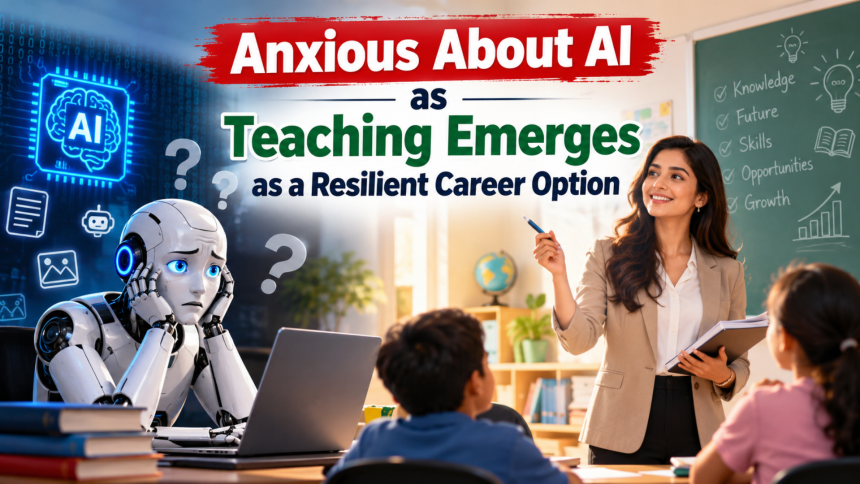
Artificial intelligence (AI) is changing the way people work, learn, and plan their careers. In South Africa, many workers and students are becoming concerned about whether their qualifications and chosen professions will remain valuable as technology continues to develop. However, teaching is emerging as one of the careers that may remain resilient because it depends heavily on human interaction, communication, and emotional intelligence.
According to The TEFL Academy’s South Africa AI Career Resilience Report 2026, teaching ranks sixth among 100 occupations assessed for AI resilience. The research highlights opportunities for South Africans interested in teaching English online or pursuing international teaching opportunities.
How AI Is Changing Career Decisions
The report reveals that artificial intelligence has already influenced how South Africans think about their professional futures. Approximately 84% of respondents said AI had changed their thinking about future careers. Of these, 48% reported that the technology had influenced their thinking somewhat, while 36% said the impact had been significant.

Furthermore, 57% of participants said they had questioned whether their chosen careers or qualifications would remain valuable because of AI. Around 69% also considered AI resilience very or extremely important when choosing a career or degree.

These findings demonstrate that job security and long-term career opportunities are becoming important considerations for people deciding what to study or which profession to pursue.
Teaching Ranks Among the Most AI-Resilient Careers
The TEFL Academy’s AI Resilience Index awarded teachers and educators a score of 95 out of 100, placing teaching sixth among the 100 occupations assessed.

Teaching remains a people-focused profession because educators must understand individual learning needs, explain complex ideas, encourage students, and respond to different classroom situations. Although AI can support lesson preparation and educational activities, it cannot fully replace the personal relationships and human judgement involved in effective teaching.
The report’s top 10 careers also include surgeons, nurse practitioners, therapists, physicians, skilled tradespeople, emergency medical technicians, social workers, occupational therapists, and physical therapists.
These professions generally require human interaction, specialist knowledge, practical skills, and decisions that depend on individual circumstances.
Why Teaching English Could Be an Opportunity
For South Africans considering a career change, Teaching English as a Foreign Language (TEFL) offers a potential route into education. A TEFL qualification can help eligible candidates prepare for opportunities to teach English online or explore teaching positions abroad.

Online teaching can provide flexibility, while international opportunities may allow teachers to experience different cultures and work environments. However, job availability, qualification requirements, salaries, and visa conditions vary by employer and destination.
People interested in this career path should research recognised TEFL courses, compare course requirements, and check whether prospective employers accept their qualifications before making financial commitments.
South Africans Are Willing to Learn AI Skills
Despite concerns about automation, the research suggests that South Africans are willing to adapt to technological changes.
Approximately 87% of respondents said they would likely participate in AI training or upskilling if offered by an employer, university, or training provider. Additionally, 80% believed AI literacy would become as essential as computer literacy for most jobs.
For teachers, learning to use AI responsibly could help with preparing lesson materials, developing classroom activities, and organising educational resources. Combining these technical abilities with communication, creativity, adaptability, and emotional intelligence may strengthen professional opportunities.
Human Skills Remain Important
The report identifies adaptability as a leading skill, selected by 50% of respondents. Critical thinking followed at 49%, while AI literacy received 43%, communication 39%, and emotional intelligence 38%.
These findings highlight the importance of developing both technical and interpersonal skills. As AI takes on more routine tasks, workers may need to focus increasingly on problem-solving, decision-making, collaboration, and understanding people’s needs.
The World Economic Forum’s Future of Jobs Report 2025 also estimates that 39% of workers’ core skills could change by 2030, reinforcing the importance of continuous learning.
Conclusion
The TEFL Academy’s 2026 research highlights growing concerns about AI and its potential impact on employment in South Africa. With 48% of respondents saying AI has somewhat changed their thinking about future careers, choosing a profession that can adapt to technological change is becoming increasingly important.
Teaching ranks sixth in the report’s AI Resilience Index, earning 95 out of 100. While no career is completely protected from technological disruption, teaching English offers a potential pathway for people interested in education, communication, and international opportunities. Developing AI literacy alongside human skills may help aspiring teachers prepare for the changing world of work.