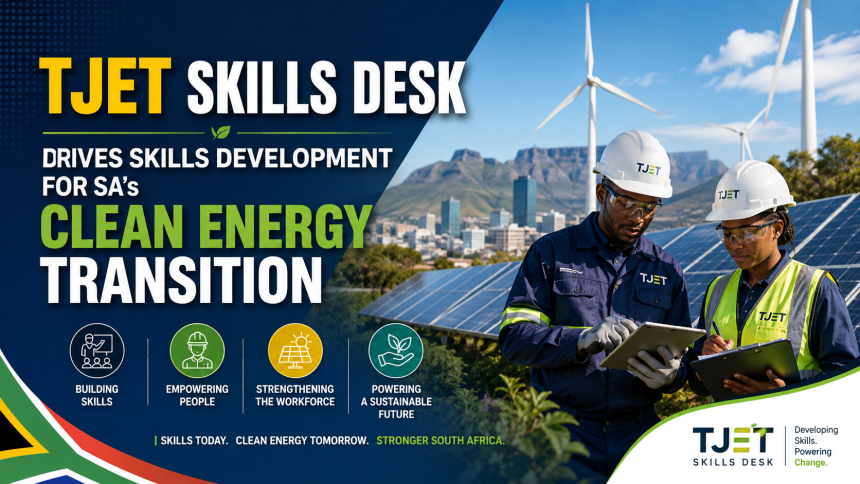
TJET Skills Desk Drives Skills Development. South Africa is undergoing a major transformation in its energy sector as the country works towards a cleaner, more sustainable and inclusive energy future. This transition is expected to create new employment opportunities in renewable energy, green technologies and related industries. At the same time, it is changing the types of skills required by employers and communities across the country. To support this transformation, the JET Skills Desk has been established as an important mechanism for coordinating skills development and employment opportunities linked to the Just Energy Transition (JET).
The JET Skills Desk was officially launched by Deputy President Paul Mashatile in August 2025. Its primary purpose is to help ensure that South Africa’s Just Energy Transition is supported by appropriate skills, new employment opportunities and inclusive economic development. Rather than focusing only on energy infrastructure, the initiative recognises that people and their skills are equally important to the success of the country’s transition.
What Is the JET Skills Desk?
The JET Skills Desk serves as a coordination mechanism within South Africa’s broader skills development system. It aims to connect government departments, education and training institutions, employers, communities and other stakeholders around the changing skills requirements of the energy economy.

As South Africa increases its focus on renewable energy and other cleaner technologies, traditional skills requirements are also evolving. Workers may need additional training to operate and maintain new technologies, while young people entering the labour market may need qualifications that prepare them for emerging green industries.

The JET Skills Desk is designed to help address these challenges by supporting a more coordinated response to the country’s changing economic and energy landscape.
Supporting Workers During the Energy Transition
The move away from traditional energy sources can create opportunities, but it can also affect workers and communities that have historically depended on carbon-intensive industries. A successful Just Energy Transition therefore needs to consider both economic growth and the potential impact on affected workers.
The JET Skills Desk aims to support people who may be affected by these changes by encouraging access to relevant training and skills development. By preparing workers for emerging industries, the initiative can help improve their chances of finding new employment or participating in new economic activities.
This approach is particularly important in areas where local economies have historically relied heavily on energy-related activities. Providing people with relevant skills can help communities adapt to economic changes rather than being left behind.
JET Skills Portfolio
The JET Skills Desk forms part of South Africa’s wider JET Skills Portfolio, which brings together different initiatives aimed at strengthening skills development for the Just Energy Transition.
The portfolio includes the National JET Skills Advisory Forum, which provides a platform for discussions around skills requirements and priorities. It also includes the Multi-Donor Initiative, which supports the JET Skills Desk through international partnerships and collaboration.

Together, these initiatives are intended to strengthen coordination and improve the country’s ability to identify and respond to skills gaps associated with the transition to cleaner energy.
Skills Development Zones
One of the key objectives associated with the JET Skills Desk is facilitating the establishment of Skills Development Zones in areas that are likely to be significantly affected by the energy transition.
These zones are intended to provide focused and demand-driven training based on local economic conditions. Instead of offering training without considering employment opportunities, the approach aims to connect skills programmes with the actual needs of industries and communities.
Skills Development Zones could therefore help create stronger local skills pipelines. By identifying emerging industries and the skills they require, training providers can potentially prepare residents for jobs and entrepreneurial opportunities that are relevant to their local economies.
The model may also contribute to more resilient communities by helping people diversify their employment opportunities and participate in new areas of economic activity.
Focus on the Eastern Cape
The Eastern Cape is one of the areas receiving attention through the JET skills development process. A situational analysis of the province is an important step towards understanding its existing skills base, economic priorities and emerging opportunities.
Such an analysis can help identify industries that have the potential to grow and determine which skills workers and young people may need to participate in those industries. It can also provide valuable information for designing training programmes that are better aligned with local economic conditions.
The analysis is expected to help identify opportunities associated with South Africa’s Just Energy Transition while ensuring that skills development initiatives remain responsive to the province’s changing economic needs.
Creating Opportunities in the Green Economy
South Africa’s clean energy transition has the potential to create opportunities beyond traditional energy production. Renewable energy projects, energy efficiency, green manufacturing, infrastructure development, environmental services and related industries can all require new technical and professional skills.
For young people, this could create new career pathways. For existing workers, additional training and upskilling could help them transition into new roles as the energy economy changes.
However, creating these opportunities requires cooperation between government, businesses, training institutions and communities. Skills development must be closely connected to actual economic demand so that people completing training have meaningful opportunities to use their qualifications.
Building an Inclusive Energy Future
The success of South Africa’s Just Energy Transition will depend not only on reducing emissions but also on ensuring that the social and economic benefits of the transition are widely shared. Skills development is an important part of achieving this goal.
The JET Skills Desk can help bring greater coordination to this process by supporting initiatives that connect skills, employment and local economic development. Its focus on affected workers and communities also reflects the broader principle of a just transition.
Conclusion
As South Africa continues to develop its cleaner energy economy, initiatives such as the JET Skills Desk are expected to become increasingly important. By identifying skills needs, supporting targeted training and strengthening local skills pipelines, the initiative can help workers and communities prepare for the opportunities created by the green economy.
Ultimately, South Africa’s transition to cleaner energy is not simply an environmental challenge. It is also an opportunity to build new industries, develop people and create more sustainable local economies. With effective skills development and coordinated planning, the JET Skills Desk can contribute to ensuring that workers and communities are equipped to participate in the country’s changing energy future.