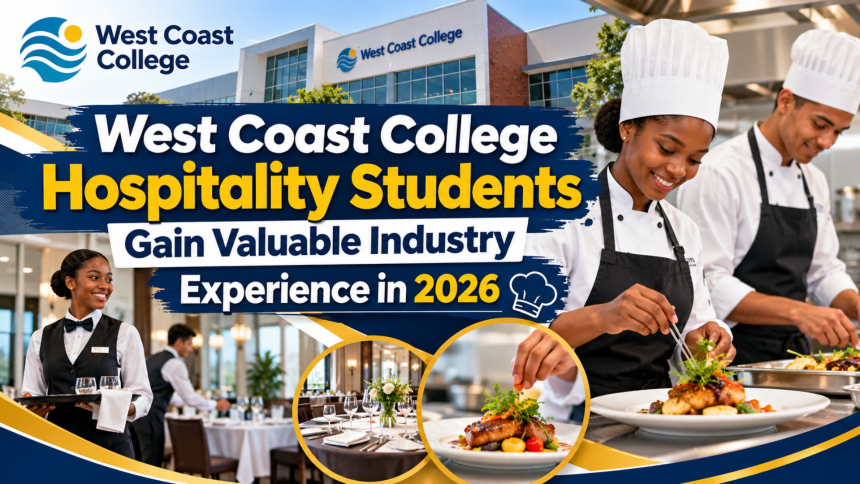
West Coast College Hospitality Students. Hospitality students at West Coast College have gained valuable practical experience through an educational excursion designed to connect classroom learning with real-world opportunities in hospitality, tourism, and cultural heritage. The initiative gave students the chance to explore different professional environments, learn about industry operations, and develop a better understanding of potential career paths.
The excursion took place on 29 September 2026 and included National Certificate (Vocational) (NCV) Hospitality students from Levels 2, 3, and 4. Four Hospitality lecturers accompanied the students during the educational trip, which included visits to several destinations linked to their studies.
The programme demonstrated the importance of practical learning in preparing students for the demands of the hospitality and tourism industries.

West Coast College Organises Educational Excursion for Hospitality Students
West Coast College continues to provide learning opportunities that help students develop the knowledge and practical skills required for their future careers. The educational excursion was organised to give Hospitality students a closer look at workplaces and attractions connected to their chosen field.

Although classroom lessons provide an important foundation, direct exposure to professional environments allows students to understand how hospitality services operate in practice. Students can observe industry standards, learn about customer experiences, and discover how different organisations contribute to tourism.
The excursion was structured according to the students’ respective NCV levels. This approach ensured that each group visited a destination relevant to its stage of learning and gained exposure to different aspects of the hospitality sector.
Level 2 Students Explore South African History and Culture

NCV Level 2 Hospitality students visited the Iziko South African Museum in Cape Town during the morning programme.
The visit introduced students to South Africa’s rich history, cultural heritage, and educational attractions. Museums and heritage sites are important components of the tourism industry because they help visitors understand the country’s historical background, traditions, and cultural identity.
For hospitality students, learning about cultural attractions can be particularly valuable. Professionals working in tourism and hospitality often interact with visitors who want to explore local history and experience the destinations they visit.
The museum excursion helped students appreciate the relationship between cultural heritage and tourism while expanding their understanding of attractions that contribute to South Africa’s visitor economy.

Level 3 Students Learn About Hotel Operations
NCV Level 3 Hospitality students visited Lagoon Beach Hotel to gain insight into the hotel industry and its daily operations.
Hotels play an important role in hospitality by providing accommodation, guest services, food and beverage facilities, and other services designed to improve visitors’ experiences. Understanding how these operations work can help students connect their academic studies with the responsibilities they may encounter in future employment.
The visit offered an opportunity to explore the professional hotel environment and better understand the importance of service delivery in hospitality.
For students preparing for careers in hotels and related businesses, exposure to an established hotel can help clarify workplace expectations and highlight the importance of professionalism, communication, teamwork, and customer service.
Level 4 Students Discover Hospitality in the Wine Industry
NCV Level 4 Hospitality students visited Swartland Winery, where they explored hospitality practices associated with the wine industry.
The wine industry contributes to tourism by attracting visitors interested in wine experiences, local products, food pairings, and regional destinations. Hospitality services are an important part of these experiences, helping businesses welcome guests and provide memorable visits.
The excursion introduced students to another professional environment where hospitality skills can be applied. It also broadened their understanding of career opportunities beyond traditional hotel and restaurant settings.
Experiences like this can help students recognise the variety of employment opportunities available across tourism, food and beverage services, visitor experiences, and related industries.
Students Reunite at Table Mountain
In the afternoon, students from all three NCV levels gathered at Table Mountain, one of Cape Town’s best-known tourist attractions.
The meeting allowed the groups to share their experiences and discuss what they had learned during their respective visits. Students were able to reflect on the differences between the destinations and consider how each location contributes to hospitality, tourism, and cultural experiences.
The shared activity also provided an opportunity for students to interact with classmates from different levels of study.
According to West Coast College, the excursion was successful, with students demonstrating enthusiasm and excitement throughout the day. One student described the experience as something they would remember for the rest of their lives.
How Industry Exposure Benefits Hospitality Students
Practical excursions can play an important role in vocational education by helping students understand how theoretical knowledge applies in real workplaces.
By visiting a museum, a hotel, and a winery, students gained exposure to different environments connected to the wider hospitality and tourism sector. These experiences can help them identify their interests, develop professional awareness, and better understand the expectations of employers.
Such activities also encourage students to think about the skills needed to succeed in the industry, including communication, customer care, adaptability, teamwork, and problem-solving.
For vocational students, opportunities to explore potential workplaces can make their studies more meaningful and help them prepare for future employment or further training.
Conclusion
The West Coast College Hospitality excursion on 29 September 2026 provided NCV Level 2, Level 3, and Level 4 students with an opportunity to explore South Africa’s hospitality, tourism, and cultural heritage sectors.
Through visits to the Iziko South African Museum, Lagoon Beach Hotel, and Swartland Winery, students gained exposure to different professional environments before reuniting at Table Mountain to share their experiences.
The initiative highlights the value of combining classroom education with practical learning. By introducing students to real-world settings, West Coast College helps broaden their understanding of the industry and encourages them to explore the many career opportunities available in hospitality and tourism.