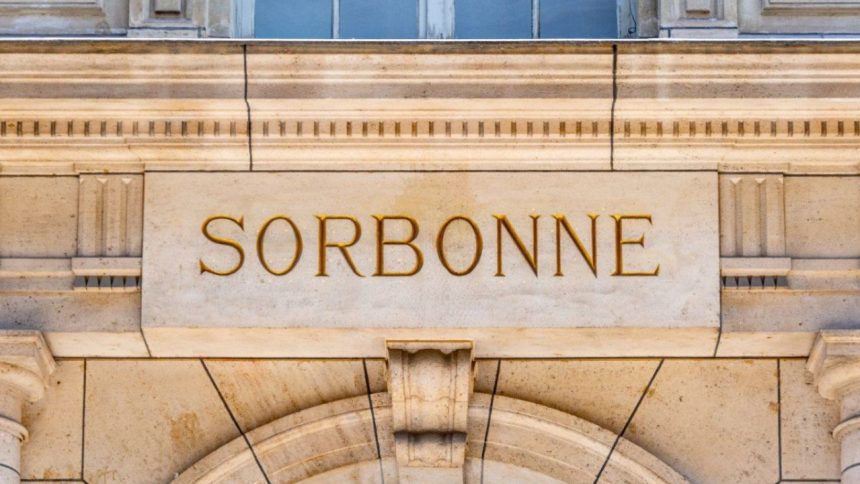
Greece Rejects Sorbonne Paris Nord’s Application. In 2026, the Greek government’s push to bring non-state universities into the national academic landscape has suffered a major blow. The much-publicised application by Sorbonne Paris Nord to establish a campus in Greece was officially rejected by the Hellenic Authority for Higher Education (HAHE). Marketed as a transformative step for Greek academia, this development has now become a point of political contention and academic scrutiny.
Sorbonne Paris Nord Controversy
From the beginning, the Sorbonne Paris Nord proposal was entangled in political hype and public confusion. The New Democracy government promoted the move as a historic partnership with the prestigious “Sorbonne” brand. However, this claim was highly misleading.
While many assumed the application was tied to Sorbonne Université, the globally renowned French institution, it was in fact Sorbonne Paris Nord, an entirely separate entity with different credentials. Critics from opposition parties and academic circles were quick to highlight this discrepancy. Despite efforts from Prime Minister Kyriakos Mitsotakis, including official meetings with university representatives, the HAHE found that Sorbonne Paris Nord failed to meet academic quality standards.

This episode exposes a deeper issue: Greece’s constitutional ban on private universities remains firmly in place, yet the government continues to seek loopholes to welcome international institutions under the guise of strategic partnerships.
Why Greece Rejected the Application

According to HAHE, the Sorbonne Paris Nord application did not align with the minimum academic requirements for establishing a foreign university branch. The institution was found lacking in areas such as curriculum rigor, administrative structure, and alignment with national education policies.
This rejection contradicts the government’s earlier optimism, particularly from Finance Minister Kyriakos Pierrakakis, who declared that the new legislation would pave the way for “internationally acclaimed” universities to establish non-profit campuses in Greece.
Political Fallout: Opposition Reacts Strongly

Stefanos Parastatidis, a Member of Parliament from the centre-left PASOK party, publicly criticised the government’s handling of the issue. On social media, he remarked that the “much-hyped Sorbonne,” which was never truly distinguished, failed to receive a license for the 2026–2026 academic year.
This setback has triggered widespread debate about the government’s motives, with many calling the entire effort a publicity stunt rather than a genuine academic reform. The failed Sorbonne initiative has become symbolic of broader concerns about the future of higher education in Greece.
Universities That Were Rejected and Approved
HAHE’s announcement did not only affect Sorbonne Paris Nord. Several other foreign universities also failed to secure approval. Here is a breakdown:
Universities Rejected
| University | Proposed Partner College in Greece |
|---|---|
| Sorbonne Paris Nord | Institut d’Etudes Francophones (IdEF) |
| University of East London | Metropolitan College |
| Queen Margaret University | Metropolitan College |
| University of West London | BCA College |
| University of Essex | Aegean College |
| University of Greater Manchester | New York College |
These institutions were reportedly disqualified due to academic deficiencies, regulatory concerns, or weak partnerships with Greek institutions.

Universities Approved to Operate
On the brighter side, six foreign universities received the green light to operate in Greece for the upcoming academic year. These institutions passed HAHE’s vetting process and met all required criteria.
| University | Partner/Setup | Location |
|---|---|---|
| University of Nicosia | Building standalone facilities | Cyprus |
| University of York | Partnered with City College | Thessaloniki |
| University of Keele | Partnered with Metropolitan College | Various cities |
| British Open University | Partnered with Anatolia College | Thessaloniki |
| London Metropolitan University | Partnered with City Unity College | Athens |
| University of Derby | Partnered with Mediterranean College | Various cities |
Among these, the University of Nicosia is unique in establishing its own infrastructure, rather than partnering with a local Greek institution.
Implications for Greece’s Higher Education Sector
The rejection of Sorbonne Paris Nord signals that Greece’s academic regulators are not willing to compromise on quality and compliance, even for politically backed initiatives. This also reaffirms the constitutional limitations on establishing private universities—a rule embedded in Greek law to safeguard academic integrity and public sector dominance.
Despite this, the government’s ambition to internationalise Greek education is far from over. The successful approval of six other institutions indicates that foreign academic collaboration is possible, but only under strict standards.
Conclusion
The fallout from the Sorbonne Paris Nord rejection highlights the complex relationship between politics and academia in Greece. While the government aims to modernise education through foreign partnerships, this incident proves that credibility and compliance cannot be bypassed. For now, Greece’s higher education sector remains a battleground for reform, regulation, and reputation, with academic excellence being the ultimate benchmark for progress.