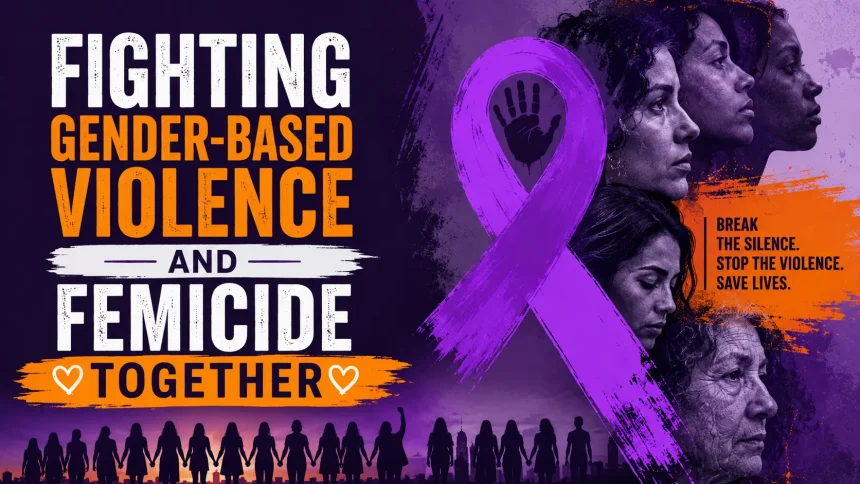
Fighting Gender-Based Violence. Gender-based violence and femicide (GBVF) remain serious social challenges in South Africa. Almost every community has been touched by stories of women or children experiencing abuse, harassment, sexual violence or domestic violence. What makes this issue particularly painful is that perpetrators are often not strangers. In many cases, victims know and trust the people responsible, including partners, relatives, colleagues, teachers, neighbours or other members of their communities.
The fight against GBVF therefore cannot be treated as a problem affecting only certain families or communities. It is a national concern that requires action from government, families, schools, workplaces, community organisations and ordinary citizens.
GBVF Is Everyone’s Responsibility
One of the biggest challenges in fighting gender-based violence is the tendency to remain silent. Abuse can take place behind closed doors while family members, friends, neighbours or colleagues may have concerns or even knowledge about what is happening.

Ignoring warning signs can allow violence to continue. Communities need to create environments where people feel encouraged to speak up when they believe someone may be in danger. Supporting a survivor should not be viewed as interfering in someone else’s personal affairs. Instead, it should be understood as part of our collective responsibility to protect human dignity and safety.

Preventing GBVF also requires society to challenge attitudes that excuse violence or treat it as normal. Violence should never be accepted as a way of exercising control, resolving conflict or demonstrating power.
Strong Laws Are Important
South Africa has developed a legal framework aimed at protecting victims of gender-based violence and ensuring that perpetrators are held accountable. Legislative reforms have strengthened protections for victims and improved aspects of the criminal justice response.

However, legislation alone cannot eliminate GBVF. Laws are effective only when they are properly implemented, cases are investigated, survivors receive appropriate support and perpetrators are held responsible for their actions.
The National Strategic Plan on GBVF, introduced in 2020, recognises that the response must extend beyond the justice system. Prevention, survivor support, economic empowerment, public awareness and addressing social conditions that increase vulnerability are all important components of a comprehensive strategy.
Supporting Survivors
Survivors of gender-based violence often face physical, emotional, financial and social challenges. Access to appropriate support can make an important difference in helping them recover and seek justice.
Thuthuzela Care Centres provide integrated services for survivors of sexual offences. These centres can assist survivors with reporting cases, accessing medical attention and receiving counselling. Such integrated services can reduce the burden on survivors by helping them access multiple forms of assistance through a coordinated system.

Sexual Offences Courts also play an important role in strengthening the criminal justice response. Expanding specialised services can help improve the handling of sensitive cases while placing greater focus on the needs of survivors.
Nevertheless, support services must continue to be accessible, responsive and survivor-centred. Nobody experiencing abuse should feel that they have to face the situation alone.
Economic Empowerment and Gender Equality
GBVF also has wider economic and social consequences. When a woman experiences violence, the effects can extend to her children, household and wider community. Women are often primary caregivers and income earners, meaning violence can affect family stability and financial security.
Economic empowerment is therefore an important part of advancing gender equality. Employment, education, skills development and access to economic opportunities can give women greater choices and independence.
Government programmes and institutions supporting women-owned businesses can contribute to these goals. Measures promoting equality in the workplace can also help women participate more meaningfully in the economy.
However, financial independence should never be considered a requirement for deserving safety. Every woman has the right to live free from violence regardless of her employment status or financial circumstances.
Families and Communities Must Take Action
The prevention of GBVF begins at home. Parents and caregivers have an important role in teaching children about respect, equality, dignity, consent and healthy relationships. Boys and girls should learn from an early age that violence is never an acceptable way to exercise authority or resolve disagreements.
Schools, workplaces, religious organisations and community groups can also contribute by challenging harmful stereotypes and promoting respectful behaviour.
Friends and neighbours should be willing to listen to survivors without blaming or judging them. When someone shares an experience of abuse, the response should focus on safety, support and connecting the person with appropriate professional assistance.
Communities must also be willing to challenge individuals who normalise violence or make excuses for abusive behaviour. Silence can protect perpetrators, while informed and responsible action can help protect vulnerable people.
Prevention Must Start Before Tragedy
Society should not wait until a woman has been seriously injured or killed before taking concerns seriously. Warning signs of abuse should be addressed as early as possible.
Awareness campaigns, educational programmes and community discussions can help people recognise different forms of abuse and understand where survivors can seek assistance. Prevention should be continuous rather than limited to periods when a high-profile case attracts public attention.
The fight against femicide requires particular urgency because it represents the devastating end of a pattern of violence in many cases. Addressing controlling behaviour, threats, domestic abuse and other warning signs can be an important part of preventing escalation.
Conclusion
Ending gender-based violence requires more than government action. Strong laws, specialised courts and support centres are essential, but lasting progress depends on society taking ownership of the problem.
Families must teach respect. Schools must promote equality. Employers must provide safe workplaces. Communities must challenge harmful behaviour. Friends and neighbours must support survivors. Institutions must respond responsibly, and perpetrators must be held accountable.
Most importantly, people must refuse to look away when they see signs of abuse.
South Africa can build safer families and communities by making prevention and survivor support a shared responsibility. Every woman and child deserves to live with dignity, security and freedom from violence.