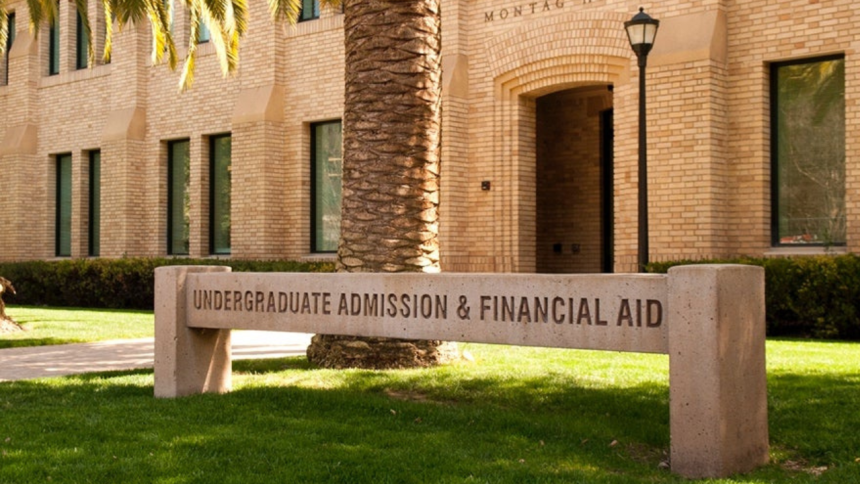
As the Stanford University application 2026 cycle kicks off, major changes are being implemented in how the institution handles admissions requirements, legacy preferences, and student financial aid. If you’re a South African student eyeing a place at one of the world’s most competitive universities.
Stanford Undergraduate Application 2026
The Stanford University undergraduate application officially opens on August 1, 2026, for students aiming to join the class of Fall 2026. This marks the beginning of a highly anticipated admissions period, especially with significant policy shifts.
Standardized Testing Requirement Reinstated
In a major policy reversal, Stanford reinstates the standardized testing requirement for undergraduate admissions. This means that all applicants must now submit SAT or ACT scores as part of their application.

According to Stanford’s Faculty Senate’s Committee on Undergraduate Admission and Financial Aid (C-UAFA), this decision was made after comprehensive analysis. The committee emphasized that academic excellence remains the primary criterion for admission.

Let’s look at last year’s entering class stats:
| Admission Component | Average Score/Class Profile |
|---|---|
| High School GPA | 3.94 |
| SAT Score (for those submitted) | 1540 |
A Holistic Approach to Applications
Despite the return of standardized testing, Stanford confirms it will continue its holistic review process. Each element of the application, GPA, essays, test scores, recommendation letters, and extracurriculars—is evaluated in context and as part of a comprehensive whole.
Legacy Admission Policy

In response to California’s Assembly Bill 1780 (AB 1780), passed in 2024, Stanford is reviewing its approach to legacy admissions.
AB 1780 prohibits universities that benefit from state-funded financial assistance from using alumni or donor status to give preference in admissions.
While Stanford currently considers legacy and donor affiliations for academically qualified applicants, a final decision has been deferred. For now:
- Stanford will continue legacy consideration during this review period.
- The C-UAFA and Board of Trustees are closely studying how to align future admissions with California’s legislation.
Stanford Financial Aid Adjustments to Comply with California Law
To comply with the new legislation and continue supporting students, Stanford will opt out of California state-funded aid (such as the Cal Grant Program).

Instead, the university will replace this with institutional scholarship funding. Here’s what you need to know:
| Family Income Bracket | Tuition & Fees |
|---|---|
| Below $100,000 | No tuition, room, or board |
| $100,001 – $150,000 | No tuition |
| Above $150,000 | Aid based on family circumstances |
Students don’t need to take any action—Stanford will automatically adjust financial aid packages to substitute state funds.
Expanding Access: Stanford’s Growth Strategy
President Jonathan Levin has announced Stanford’s broader goal to expand access to quality education. As a first step, the university has increased its incoming class size by 150 students for Fall 2026.
Future plans include:
- Exploring additional enrollment increases
- Improving access for underrepresented students
- Studying the impact of class expansion on infrastructure and student services
Support for First-Generation Students
In recent years, first-generation college students have made up nearly 20% of Stanford’s freshman class. The university is committed to ensuring inclusive access for students from diverse backgrounds.
Financial aid continues to be a cornerstone of this mission:
| Stanford Aid Facts (Recent Years) | Figures |
|---|---|
| Students Graduating Without Debt | ~88% |
| Tuition for Families Under $100,000 Income | R0 (Fully waived) |
| First-Generation Students in Each Class | ~20% |
Stanford Application 2026: What You Should Prepare
If you’re planning to apply to Stanford for the Fall 2026 intake, here’s your essential checklist:
- Start Application: August 1, 2026
- Prepare for SAT/ACT: Testing scores are now mandatory
- Polish Your Essays: Reflect your passion and purpose
- Gather Documents: Recommendation letters, transcripts, and awards
- Review Financial Aid Eligibility: Understand Stanford’s scholarship adjustments
Why This Matters for South African Students
For South African students looking abroad, Stanford’s renewed emphasis on academic excellence, combined with its commitment to financial support, makes it an increasingly viable option. With many South African households falling below the $150,000 (≈R2.7 million) income threshold, tuition assistance becomes a real opportunity.
Additionally, first-generation students from developing nations are often prioritized under global access initiatives—making this a golden moment to apply.
Conclusion
Stanford University is entering a new phase of admissions policy, financial aid transformation, and inclusive access. With the standardized testing requirement reinstated, an evolving stance on legacy admissions, and expanded financial aid options, students applying in 2026 for the Fall 2026 intake should stay informed and proactive.